Monthly Archives: January 2012

Real Malayalee Men Wear Skirts

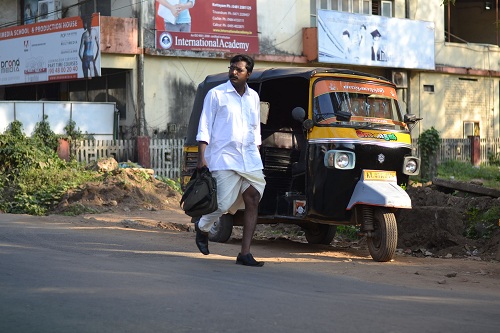
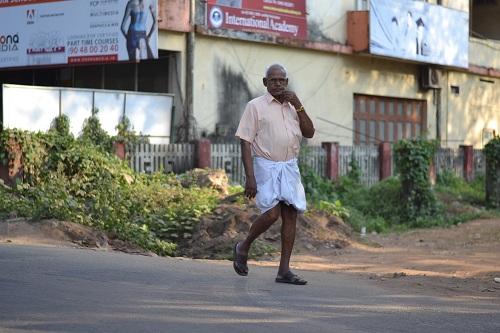
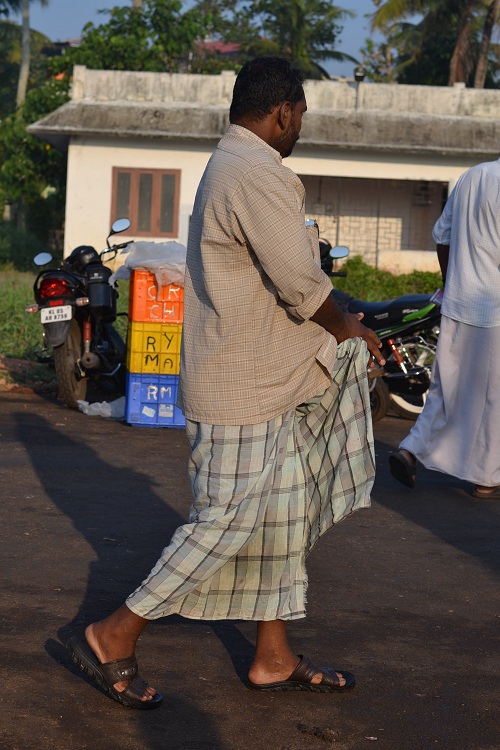
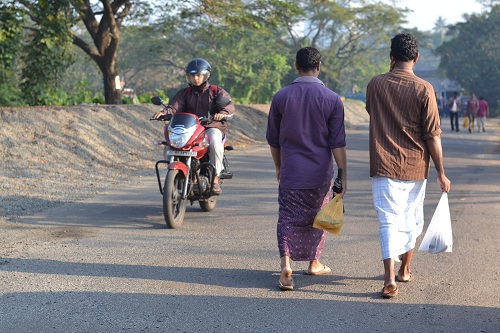
Pants aren’t comfortable attire in tropical humidity and blaring sun. During our travels through the Middle East and Asia, we’ve seen men wearing varieties of skirts and gowns. Malayalee men have perfected the mundu as their solution to heat. A mundu is a rectangular cotton cloth worn in a similar fashion as a sarong and is preferred attire all over the state of Kerala. In fact, Sandeep attended half our wedding in one. Mundus come in various assortments, all either solid or with a stripe border. Any further designs or prints demote a mundu to a lungi. A lungi is worn in a similar manner, but is usually made of lower quality cotton and, as per Sandeep “is like wearing your gym clothes or pajamas.”

Historically, men wore lungis most of the time, as they worked at home or in farms. Mundus were reserved for occasions such as religious observance and celebrations. Hence, after one wear, they were washed, pressed and ready for the next occasion. Today, with more of life occurring outside the home, men prefer cream mundus, which are better at hiding dirt and can be worn a few times. Just like jeans.

Even as much of the country trades in traditional clothes for ‘Western’ attire such as pants, jeans and dresses, conservative Kerala holds steadfast to its roots. It’s no wonder, the mundu serves so many glorious functions.

Most importantly, it’s cool. The light cotton provides a natural ventilation system, churning up cooler air from the ground with every step.  If you desire an even cooler walk, feel free to lift up one or both ends of your Mundu to increase the breeze.

If you’re really hot, go ahead hike it up into a mini skirt.

A Mundu can even serve as a towel when there is none.

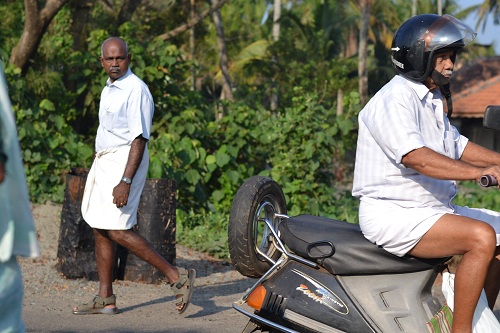
The free flowing fabric makes it easy to perform all sorts of tasks, from playing cricket to straddling a bike.  So inspired was I by the mundu that I bought my first sarong. The only problem is that it won’t be acceptable in Kerala for me to hike it up. Women don’t show leg here, but it’s perfectly acceptable for men.

Inspired by the Mundu? They go for between $5 and $15 depending on the quality of the fabric and border design. Wear it as you would a towel, just be sure to pull it tight. Match the border with an appropriate shirt. The only other direction is that you may want to consider a religious allegiance before you proceed. Hindus and Christians wear the mundu left to right. Muslims wear to right to left, as the Koran is written left to right.

3 Comments

Filed under India

Finding a Rhythm in Kerala

India, our motherland, has been the most difficult country for us to adjust to. Most of this has been due to lack of control. In the past, we’ve stayed for no more than two weeks, and were happy to go with the flows that our families set. However, we’re spending two months here now, and relying on others for everything is becoming uncomfortable.

In every other destination, our we have had to figure things out for ourselves. We’ve chosen to stay mainly in rentals as opposed to guest houses or home stays because we value some privacy. After a few days of scouting around for grocery stores, transportation, and babysitters we fell into a basic rhythm. We maintained control over our comings and goings, and the people we relied on were generally reliable. Our independence may have cost us the ability to truly live as locals, but it’s enabled us to maintain some normalcy for us and the kids.

We arrived in India expecting to rely on the system our families have established. We’re here to spend time with our parents and extended family and are staying with them. However, what this means is that rather than doing our own groceries, we add to an existing list. Instead of calling a tuk tuk, we negotiate around the rest of the house’s schedules for the cars and driver. A basic errand turns out to be a detailed conversation of who knows who and how and where the task should be done. We love having this time with family, but needed to establish our own routines.

One challenge was mobility. We solved that problem when Sandeep braved the Indian wheel.

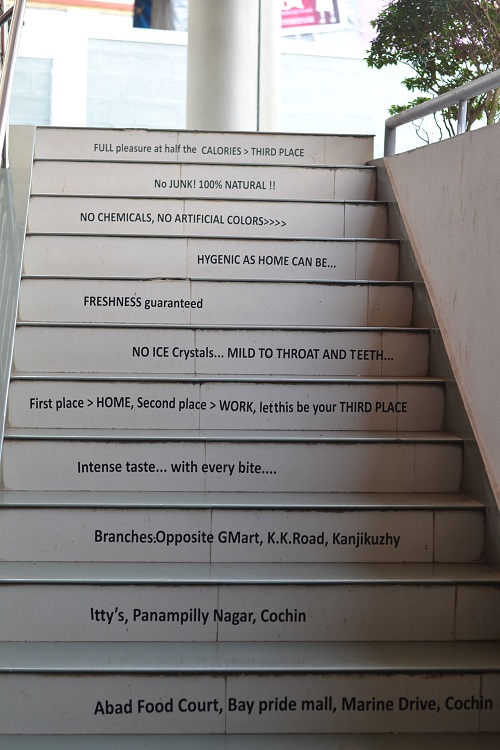
Another challenge was eating and drinking what we want. Fo example, coffee in India is a dessert-like concoction involving liberal amounts of sugar and whole milk. After much hunting we found the only espresso machine in town at Third Place. Like most establishment here, its shutters don’t rise until 11 AM. After some negotiation and a promise to patron every morning, the manager agreed to serve us cappuccino at 9:45 while she readies for the day.

We love Indian food, and can’t go a week without it on the road. Even in Thailand, with it’s diverse cuisine, we caved in and sought Indian. But days on end of spice laden dishes, coconuts, and hearty meals had our stomachs begging for a break. We resurrected Sandeep’s parents barbecue, which hadn’t seen a spark since it left New Jersey four years ago.

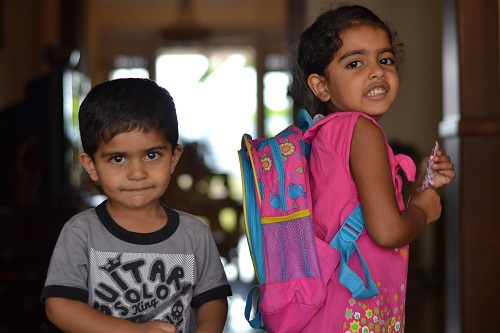
Another goal was to find the kids some friends. They’ve had unlimited time with us, but minimal time with their peer group. We decided to use our block of time in India to enroll them in a morning pre-school. It’s an adjustment for them, since the children all speak Malayalam, but Ava and Kayan are excited to see their new friends each morning and are filling out their vocabulary with Malayalam.

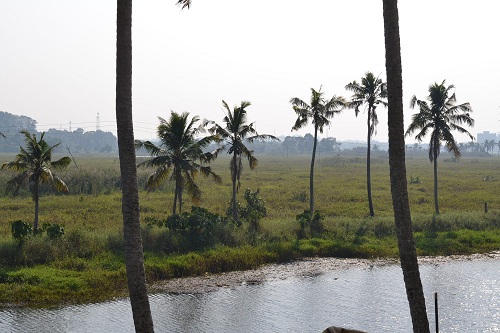
Our persistence has led to a morning schedule. Sandeep and I drop the kids at school at 9:30 and then go on our speak easy cappuccino date. Back home, I make a bland egg breakfast, after which we park ourselves on the terrace. Sandeep works, I write, and we both watch the morning unfold along the backwaters and rice fields.

The rest of the day is a commotion of family errands, visitors and visits. But the days as a whole end with a good balance of extended family time and nuclear family independence.

2 Comments

Filed under India

Braving the Wheel in India

I have an Indian driving license. My accomplishment was the result of completing a certain number of hours at a driving school. The school car had two sets of gears, pedals and wheels, which meant that the instructor drove the car and I just sat back and waited for the hour to finish. I never took a driving test – just paid and received my laminated card.

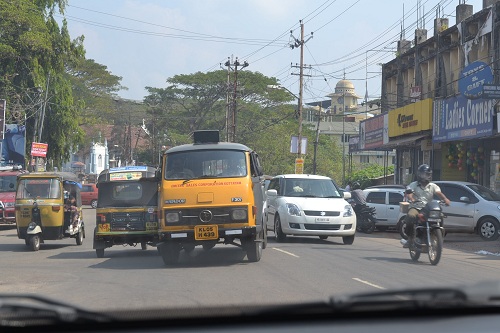
This process may explain the lawlessness of Indian roads. One ways, lanes, shoulders – none of these things mean anything to the average Indian driver. In Varanasi, our driver turned into the opposite side of a national highway for a few kilometers because he didn’t want to double back to our exit. The only road rule that is followed, most of the time, is the traffic light. When we asked a driver in Mumbai why he blatantly ran a red, his response was “It’s night time. You don’t have to follow the lights at night.” We also learnt that a right indicator does not always mean a person is turning right, but that they are giving others permission to overtake on the right. That’s a guessing game I don’t want to play.

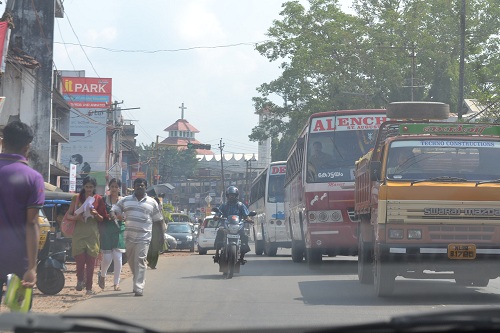
We both went through the process of getting international licenses before we left home, so decided to put his to use today. Naturally Sandeep was somewhat hesitant to get behind the wheel here.  Here are some shots I took from the front seat during the 1 km drive from home to town.

Even the kids were somewhat confused at to why Sandeep was driving. We didn’t have a car in New York City, and save for a few vacation rentals, they don’t see him behind the wheel. On our trip so far, we’ve relied on others for transportation.

Ava: Why is Dada driving in your seat?

Diya: The driver sits on other seat because the cars drive on the opposite side of the street here.

Ava: No they don’t.

For once Ava wasn’t just being argumentative, she was correct. The cars drive wherever they want.


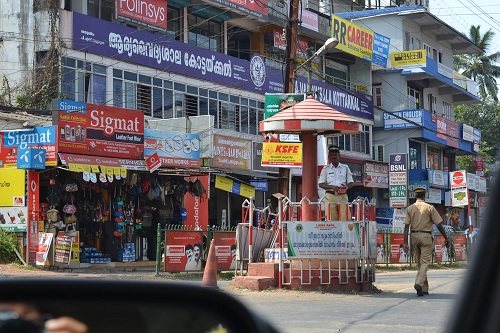
The busiest intersection in town doesn’t have a traffic light. The solution is that a policemen stationed at a rotunda holds up a miniscule stop sign (look closely) – sometimes in a particular direction and sometimes to no where in particular. As we approached him, he sternly held up the sign to the car on our right, but motioned to us to keep moving forward. There was no logic behind the differentiation, and there is no one stationed there at night.

Sandeep started driving because it seemed silly to ask his parents’ driver to take us on short runs. We also wanted some freedom to roam around on our own. Sandeep’s been amazingly calm about the entire experience. I asked him, his father and the family driver if anything bothers them about driving in Kerala.

Sandeep: The lack of any signs. I don’t know what’s one way, there are no speed limits, or stop signs. I just try to go with the flow. I do like the fact that I don’t have to worry about breaking the law, because it is 100% unenforced.

Sandeep’s Dad: The potholes, because my car has low clearance.

Jos the Driver (has been a family driver for 15 years):  The lawless bus drivers just want to over take the cars. They’re always driving in the opposite direction of traffic.

3 Comments

Filed under India

A Visit to a Kerala Fish Market

Over 4,600 miles of sea lap the shores of India, resulting in coastal cuisine that is laden with fish. Fish species and preparation vary around the country, but one thing that binds coastal Indians is their insistence that their region knows fish best. Sandeep’s family is from the southern coastal state of Kerala and mine is a mix of Mumbaikers and Goans, both coastal. Our entire family is programmed to love fish – raw, fried, grilled, cured, dried, pickled – we’re up for anything with gills or shells.  For an entertaining and educational journey about fish in India, read Following Fish with an empty stomach. In it, Samanth Subramanian offers a colorful collection of investigative fish-oriented stories from around the country.

Kerala is particularly fish rich, as it has the added bonus of rivers and backwaters that sparkle with fresh water gills. No day is complete at Sandeep’s parents without fish. It’s acceptable fare for breakfast, lunch, tea and dinner.

Curious to get closer to the source, we decided to go fish shopping. We left at the crack of dawn, to make sure we got the freshest of the day’s catch. Even with Sandeep’s Malayalam, we knew we would stand out at the local market, so asked a neighbor to go with us. Uncle, as he is called, loves the bottle. So when we asked him last night to be our guide, it was clear that his ability to make it was correlated to the night’s consumption. He was up bright an early, along with his booming voice and confident gait. Uncle knows everyone in town and everyone in town knows not to take him for a ride. He’s the kind of guy you want on your side of a fish market negotiation.

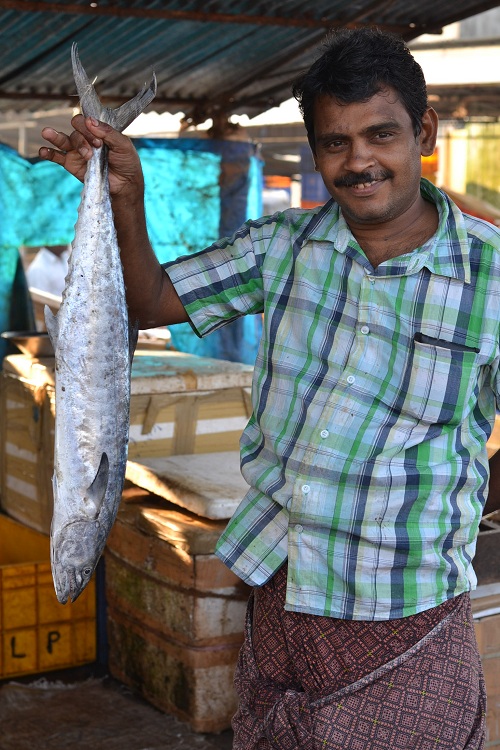
The local fish market is in the pocket of a country road. It consists of about 20 stalls, with obediently stacked fish awaiting direction from enthusiastic vendors.

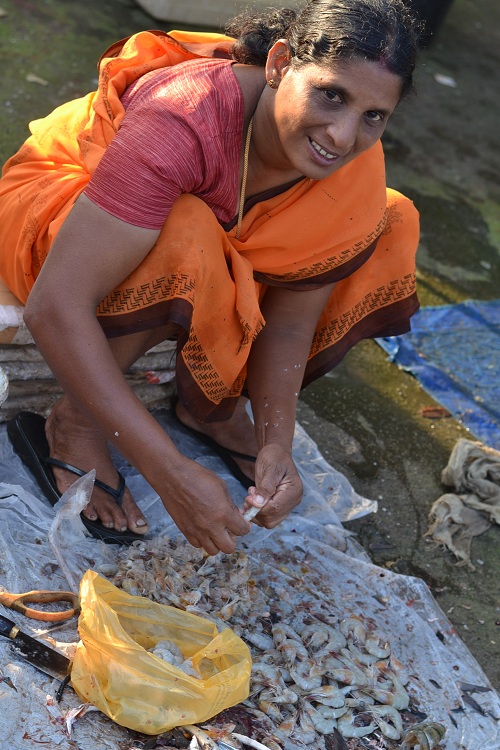
Each vendor specializes in one or two types of fish. Fish butchers and shellfish pickers are scattered among the stalls.

Uncle boisterously negotiated at every stall. The stalls organize their catch with freshest up front, and yesterday’s catch is discounted 25%. In a feat of nature, some fish were still moving, in rhythmic determination to make it back to the backwaters. This is clearly fresh stuff.

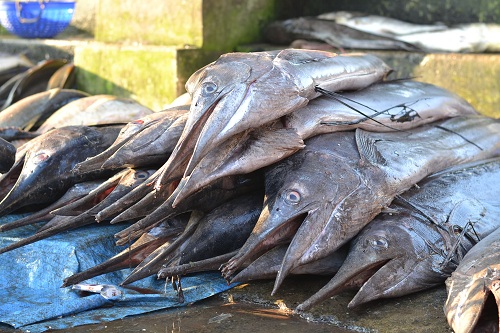
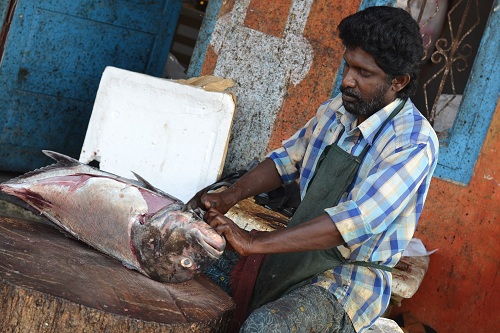
The stars today were pearl spot, snapper, sharks and several varieties of sardines and mackerel. We were overwhelmed at what to buy and let Uncle dictate the way. When we settled on a type of fish, Uncle checked the gills (ruby red) and eyes (firm and clear) and weighed the selection. The purchase was then passed on to butchers, who gut, de-bone, fillet and cube away on solid tree stumps.

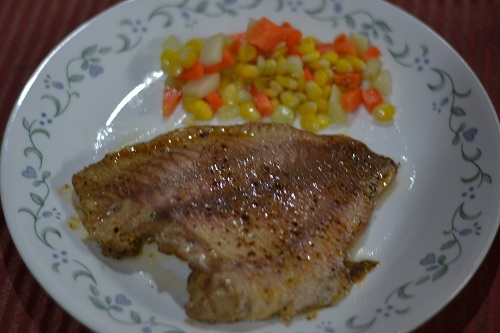
We came home with two huge snappers ($8), two kilograms of sardines ($2), and one kilogram of freshly shucked crab meat ($1).  We wanted a break from masala-fried fish and fish curry, so decided on grilled snapper for dinner.

Tomorrow’s lunch will be flash fried sardines with a squeeze of lemon. Clams stir fried with coconut and tropical spices will grace the dinner table the day after. We can’t get enough fish.

2 Comments

Filed under Food, India

Our Garbage Welcomes Us Every Morning

We never paid much attention to our garbage in New York City. Sure, at home we meticulously recycled. We even toyed with cloth diapers but settled on the convenience of disposable ones. We reused plastic bags on our dog walks. But once our garbage left home, we never thought about it again.

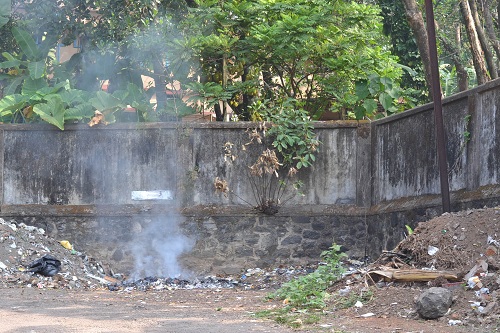
After coming to India we are acutely aware of what happens to our garbage. Both our parents live in areas where there is no garbage collection system. They compost their wet refuse and arrange for recyclables to be picked up by scrap collectors. The rest is burned in a designated area. Yes, it is terrible, but the alternative is to dump it in some random location.  At Sandeep’s parents’, the garbage is dumped at a designated spot about 100 yards from their gate, where it is burned every evening. Many people in India don’t have private transportation, so the government chooses dumping spots that are convenient to reach but relatively uninhabited. In this case, relatively uninhabited involves a handful of houses, a tea stall and a beauty parlor around the corner. This is the scene of our garbage burning this morning.


We have taught the kids not to litter, no matter what other people do. We pass the dump every time we go to town and it’s hard to explain to Ava why diapers (likely Kayans!) are lying on the side of the road.

With our garbage literally staring us in the face everyday, we’ve altered our already frugal consumption habits. We’ve cut back on juice boxes and soft drinks and Kayan is an intense experiment at potty training. It’s not going very well.  He’s projecting a bit – this afternoon he made his dog use what he claimed was a potty.


Most of us forget about our garbage once it leaves our home. Unfortunately, or perhaps fortunately, for us, we’re forced to face our garbage every morning. The positive impact is that the entire family is more responsible about how and what we consume.

Leave a Comment

Filed under India

Gaining an Appreciation for Things Handmade

A year ago, Sandeep left his corporate life to join a home furnishings company, Surya. I found this hilarious. Sandeep is a minimalist and opposed every item I brought into our house.

So I found it rather curious to be in North India, accompanying him to various rug making villages. He asked me to join the business trip and serve as Hindi translator (also hilarious) and photographer. After spending a few days getting intimate with the rug making process, even Sandeep started pointing out rugs he liked.

I had a cursory understanding that handmade items are more unique and involve more care, but I didn’t appreciate the labor or skill specificity required. Save for some artwork, we own very few things that are truly handmade. As much as I remain an Ikea aficionado, I now have a better appreciation for the stories that go behind hand crafting.

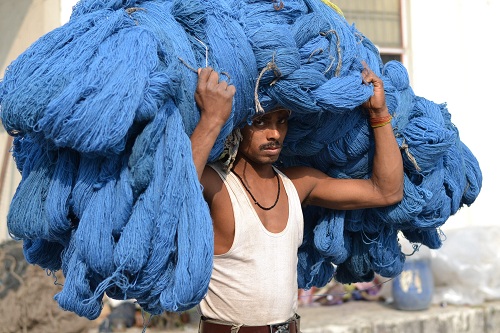
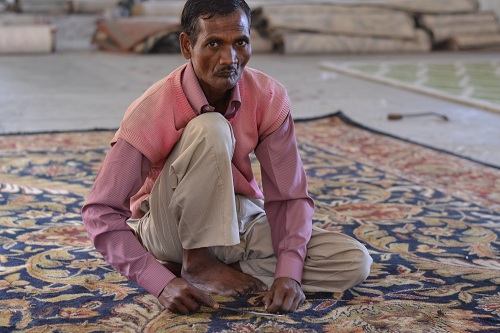
The rugs are made in farming villages by artisans who supplement their agrarian income with more stable employment. Each village specializes in a task, such as weaving, cutting or washing. As with many traditional artisans, those in the Indian rug industry have learned their art from their parents and plan to pass it to their children.

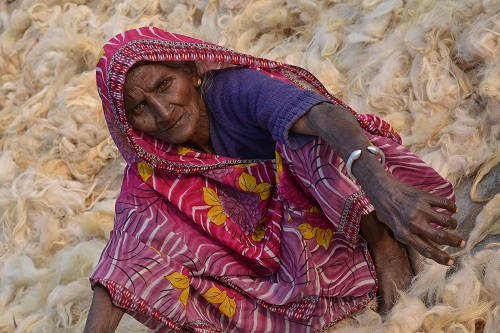
The industry remains extremely traditional, with women and men performing separate tasks. Women focus on work that requires patience, like separating wool. Apparently (I was told), men have no patience. Many of these artisans are camera shy. Despite laughing together as I took pictures of the rugs, their faces sprung into somber poses when they saw the lens. Here are some faces behind handmade Indian rugs.

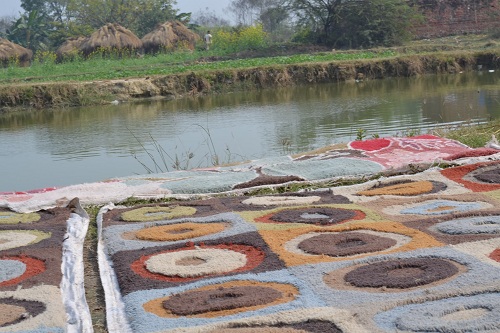
Once the rugs are woven, trimmed, and washed, they are laid out in the sun to dry among the village crops. As the rugs pass through various stages of production, life in the villages goes on. The cows sleep and the wheat dries.

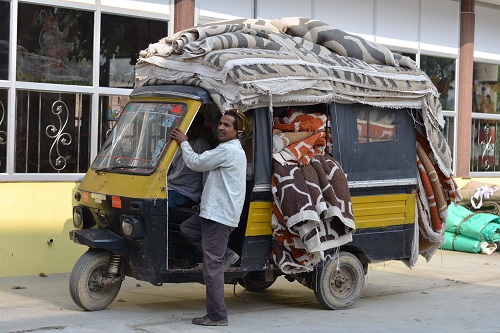
Given how labor intensive the entire process is, it seemed out of context to see a huge truck arrive to transport the finished goods. And then we saw this, which reminded us that, no matter how modernized things get, we are still in India.

We tend to buy most things for convenience, price and design. Where we do have a few handmade items, we don’t fully appreciate the community, labor and skill behind them. Some of these rugs involve dozens of artisans and several months of work to complete. Moreover, many of these skill specific trades are dying as a new generation becomes more educated. After seeing the stories and people behind these rugs we intend to spend more of our travels getting to know similar cottage industries. Once we are back home, we hope to support such artisans by including more handmade products and the stories behind them in our home.

2 Comments

Filed under India

Our New York City Family Favorites

This month, our Facebook Families on the Move group got nostalgic about home. We are all traveling around the world with children and keep asking each other for advice on our hometowns. This is our collaboration to bring you our favorite family spots from home.

For the New Yorkers reading this blog – I’d love to know your comments on our selection or your thoughts on what was missed. We could only choose five and know that our city has hundreds more.

Whole Foods Bowery

This Whole Foods has two floors spanning an entire city avenue. Roaming the wide isles (a rarity for New York City grocery stores), cheese vault, dry food bins and upstairs food court is like attending a food amusement park. The real education is to be had upstairs in the Whole Foods Culinary Center, a teaching kitchen that hosts recreational classes in an intimate settings for kids. The calendar rotates each season. Our kids have taken Spanish Tapas and Indian food classes here. Ava went to a week long summer camp last year, where each day was focused on food from one of the five New York City boroughs. She made pizza from Staten Island, pierogies from Queens, cheesecake from Brooklyn, empanadas from the Bronx and bagel and lox from Manhattan. Chefs Wei and Cricket are great with the little ones and provide everything from safe cookware to miniature bibs. The a la cart classes are well priced at about $20 per child per class.

Brooklyn Smorgasburg

Brooklyn Flea was started in 2008 as an outdoor market for local vendors. It’s only three years old, but has already gained a strong following for its quality and breadth of offerings. So much so, that it’s all-food offshoot, Brooklyn Smorgasburg, is packed every weekend during the summer. The market is wonderfully kid friendly, with stalls selling everything from stuffed animals to handmade furniture. And who knew clothing racks can be so fun when filled with sequins, yards of fabric and the occasional boa? The food choices meet all our needs. I usually go with a veggie quesadilla from the Red Hook Taco place, Sandeep gets bratwurst, and the kids get fruit salad, horchata and tacos. The other unique thing the venue offers is a plaza where the kids can actually feel their feet on grass – a rarity in New York City.

Tompkins Square Park

When we first moved to New York in 2003, a local friend advised that we could live anywhere in Manhattan except north of 96th Street and Alphabet City. How things have changed. In 2009 we moved to Alphabet City, now one of the few neighbourhoods in Manhattan that is still filled with mom and pop stores and a very strong cultural heritage. Tompkins Square Park in the 1980s used to be a drug dealing and using shanty town. Now it houses one of the nicest playgrounds in the city. Our favorite is the one along Avenue A between 7th and 9th streets. It has several distinct areas for different age groups, a large sand box and water sprinklers in the summer. Fun for the kids extends beyond the playground. An eclectic mix of musicians, artists and elderly playing chess claim the benches and make for eventful discussions. The north side of the park has some playing courts and a small, shallow public pool. You’ll find plenty of eating choices around, but our favorites are Australian pies at Tuck Shop on St. Marks between First Avenue and Avenue A, and stuffed Venezuelan arepas Caracas Arepa Bar on 7th Street between First Avenue and Avenue A.

The New York City Transit Museum

We’re generally not a museum family. The kids are too difficult to control and we can’t focus on the exhibits. There are several museums in the city that are catered to children and have children’s activities, but the one that our entire family enjoys the most is The New York Transit Museum. The museum is located in an old subway station in Brooklyn Heights and offers a history into the century old subway system. The best part lies underground, where a live subway line houses cars from most decade since the system’s inception. The kids have a blast running between the cars, and we enjoy the step back in history with period appropriate advertisements.

Sandy Hook Beaches

There are some great beaches within a couple of hours of the city. We are fans of Sandy Hook because half the fun is getting there. The Seastreak Ferry departs from 34th Street and the East River as well as Wall Street and arrives in Sandy Hook National Recreation Area within 30 minutes. The ride passes under the city’s bridges and the Statue of Liberty before docking at a Sandy Hook. Summertime weekends can get packed with the school crowd, but a weekday trip usually offers quiet beaches and unspoiled surroundings. It’s also possible to rent bikes and cycle the park, just go with all needed supplies. Apart from two cafes selling burgers, hot dogs, fries and beach umbrella rentals, there aren’t any conveniences.

The links below take you to the homes of other traveling families. Enjoy the trips.

Ambergris Caye, Belize – A King’s Life

Boston, USA – Great Family Escape

London, UK – Travels with a Nine Year Old

Central Australia – Wandering Photographer

South Australia – Livin On The Road

The Netherlands – Act of Traveling

Antigua, Guatemala -Raising Miro

Seattle, WA – Walkingon Travels

Sunset Coast, MI – WanderingEducators

Vancouver, B.C. – With 2 Kids In Tow

Kingston, Ontario – EdventureProject

Lake Chapala, Mexico – Living Outside of the Box

Washington, D.C. – Growing Grace Life

Costa Rica – Bohemian Travelers

Fethiye, Turkey – ramblecrunch

Brisbane, Australia – OurTravelLifestyle

Israel – The Nomadic Family

Chiang Mai, Thailand – The Dropout Diaries
43 Comments

Filed under Travel With Kids, Traveling Family Writing Projects

The Goldie Hawn Tour of Varanasi

We’ve heard of walking tours in New York City based on celebrities or shows, such as the Sex and the City walking tour. But we didn’t expect an evening outing in the ancient city of Varanasi to turn into a Goldie Hawn tour. Varanasi is a holy Hindu city on the banks of the Ganges River. Our intention last night was to attend the sunset aarti, a daily outdoor offering performed on the ghats, or steps leading into the river.  We were warned the area is chaotic between the pilgrims, locals and tourists who all congregate within a few hundred meters of each other during sunset. Hence, we did what we rarely do. We asked the hotel to arrange for a guide.

Our guide, Pai, an enterprising business man, spoke perfect English. We later found out that he also taught himself French and Japanese (his abilities in both were better than my own, and I’ve lived in Belgium and Japan) because of the influx of tourists that speak these languages. One of the first questions he asked when he found out we were from America was “Do you know Goldie Hawn?” It seemed an out of context question.

For the rest of the evening, between explaining the goings on of the aarti and guiding us around streets that turned back on themselves, Pai went through Goldie’s entire life story, and her relationship with his family. Apparently, Goldie comes to Varanasi every couple of years for spiritual reasons. Pai mentioned several times that he is her guide of choice.

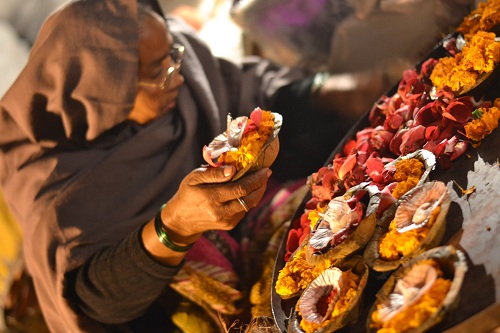
We stepped into the ghats and bought a flower offering. Pai explained that Goldie too buys offerings to give to the river. We were elaborately told how she and Kurt Russell have bought the offering together and the very same spot.

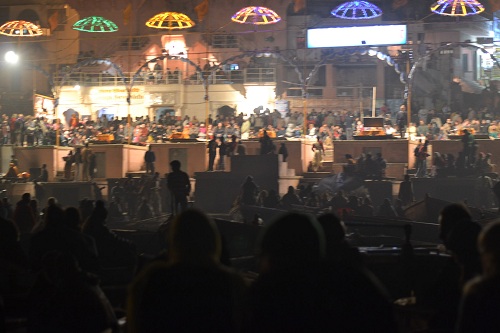
The aarti was far less serene than we expected it to be. Experiencing it from river certainly seemed the calmer alternative to standing along the banks, but the boats were packed so tightly we could barely hear Pai explain how much Goldie loved to take pictures of the aarti. He reminded us a few times that Goldie uses the same boat when she is in Varanasi.

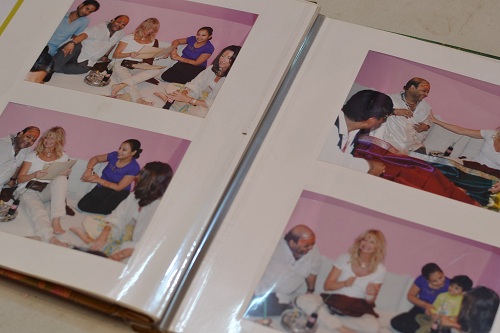
After the aarti was over, Pai invited us over to his house, where we were shouldn’t have been all that surprised to find a silk shop waiting for us. We declined Pai’s offer of tea, which launched him into a discussion about how Goldie likes her chai. I would have thought the Goldie tales were fabricated, except that Pai pulled out a photo album of him and the star over the years. Goldie holding his baby son. Goldie talking with the same son some years later. I asked if I could take a picture of the album, and Pai said “Oh, if you want to take a picture, let me get the newer album.” And out he came with a leather-bound version.

I don’t know how much we learned about the sunset aarti. Our time was limited, and the aarti we attended at the main ghat, Dasaswamedh, was very much catered to tourists. But now we know how Goldie likes her tea and what color scarves she prefers to buy.

If we had more time here we would attend the aarti at one of the smaller ghats. I suspect these offer a more authentic experience. At least now I know to plead ignorance if someone asks whether I know Goldie Hawn.

Leave a Comment

Filed under India, Religion

Our Munnar Tea Plantation Getaway

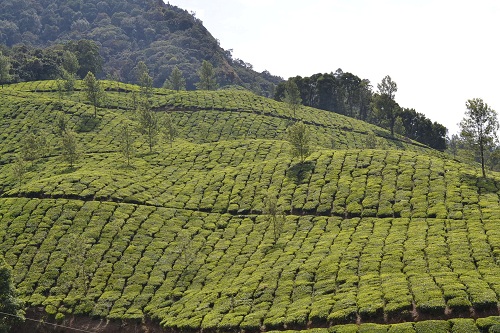
We spent the last few days of 2011 staying in an old British tea estate in Munnar. Some of our adventures were just published on Huffington Post. I’ve been fascinated with Munnar ever since I saw it captured in the movie Before The Rains. Given the expectations I had built, I was worried that the real thing would dissapoint.

httpv://www.youtube.com/watch?v=Q37yxRpKzx0

The trip was a gift from Sandeep’s brother, who generously hosted us for his own 30th birthday. Munnar is far removed from everything, and staying on a private plantation meant away from any modern conveniences. With time on our side, the kids were able to enjoy animated stories from their uncle, who works at Cartoon Network and came with plenty of supplies. A focus group was held on the spot.

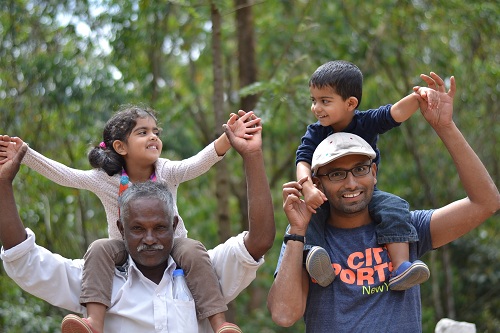
The bungalow we stayed in was fully staffed and houseman, Silverraj, doubled as cook, guide, waiter and horse. Ava perched comfortably on his shoulder during a 3 hour trek one afternoon. As we strolled rolling hills of tea, I heard Silverraj wincing ever so quietly. Silverraj always has a bright smile on his face, so I turned around to see what was going on and found Ava diligently plucking his hair. I suppose she doesn’t find herself on top of a full head of hair very often.

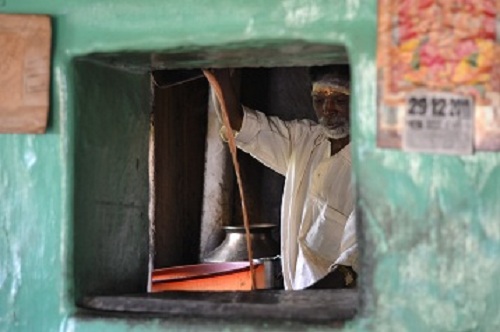
We ambled across the only village within several kilometers and into the only tea shop in town. The tea maker was a colorful man in looks but somber in action. Any animation on his part was focused on churning out meter tea. The traditional cool tea in India is to employ a physics defying process of rapidly pouring the tea from a great height (approximately one meter) in one hand into the waiting tea cup in the other. Surprisingly, tea drops don’t splash about during the process.

There have been a few times on this trip where I have found myself mesmerized. Sometimes it is an experience – like seeing 12,600 monks recieving alms. Other times it is a moment that catches me off guard, like when I found Ava and Kayan asleep holding hands across a bed in Penang. In Munnar it was nature – open, rolling hills of green, lots of fresh air and the perfect afternoons for freshly brewed tea.

4 Comments

Filed under Food, India

Kaveman Kayan

When Ava was an infant, Dr. Harvey Karp’s Happiest Baby on the Block was our lifesaver. His simple methods ensured that we had a calm, smiling, rested baby. So when she turned three and started throwing tantrums, Sandeep and I bought The Happiest Toddler on the Block DVD. Dr. Karp’s advice is to see toddlers as cave(wo)men and deal with them accordingly.

httpv://www.youtube.com/watch?v=QunggpuVqeo

As is generally the case, we didn’t find the sequel that good. Ava just didn’t strike us as cave-like.

Kayan, but contrast, is a cave person at heart. If Dr. Karp comes out with another addition of Happiest Toddler, we shall definitely send Kayan to the casting call. We’ve been studying his behavior closely during our trip. Weeks of constant togetherness have given us plenty of material confirming that his toddler-hood offers insight to our origins.

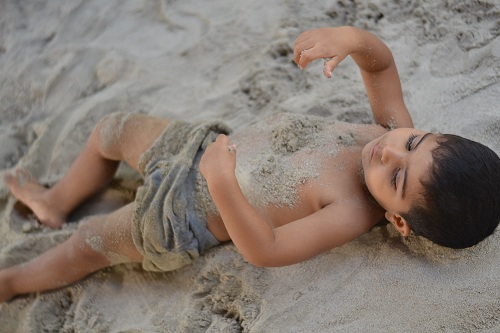
When faced with sand, gravel, dirt, pebbles – anything the earth has dusted off – Kayan’s innate reaction is to cool off in it. I have heard that cavemen may have used mud as natural sunscreens. This picture was taken on a Goa beach and, yes, it was a sunny day.

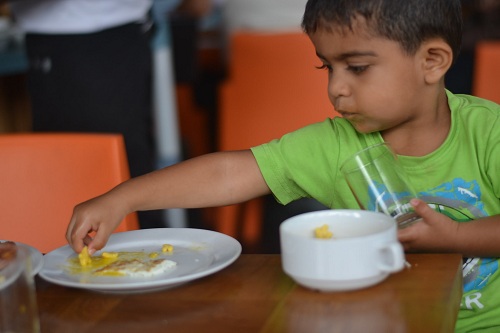
When faced with a choice of utensils, Kayan prefers his hands. That goes for Chinese soup, Thai noodles or cereal dipped in egg yolk in Malaysia.

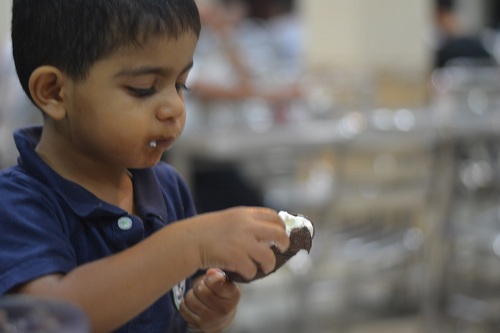
Even when ice cream comes neatly packed around a stick, Kayan would rather use his hands as a scoop.

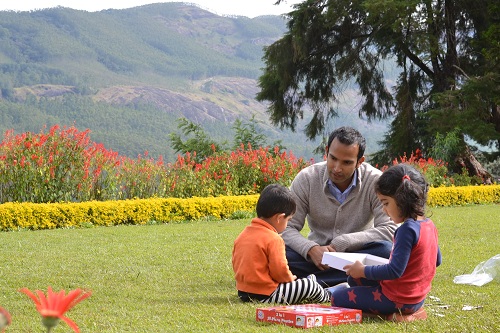
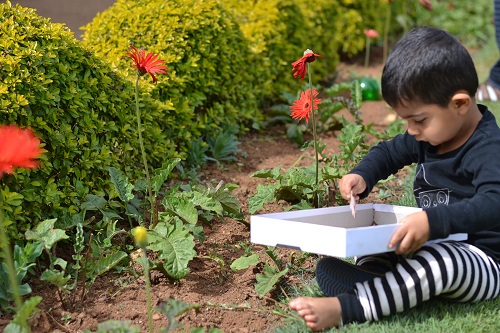
A brand new puzzle set to Kayan turns into a primitive digging tool. That too, in a flower bed.

Perhaps Kayan has caught on to the fact that norms differ among countries. He may as well resort to the common place we all came from before we had to worry about social graces. I also know that we, as parents, are contributing to the behavior. We have generally taken a more laid back approach to parenting. We’ve noticed in Asia that kids are less restricted than in the U.S. and parents don’t obsess over every spilled drink or dirty hand. Kids run around, some messier and more rambunctious than others, and people don’t see them as an annoyance. It’s been convenient for us to adopt a similar mentality, and certainly advantageous for Kayan to hone his connection to our ancestors.

6 Comments

Filed under India, Malaysia, Thailand, Travel With Kids