Monthly Archives: January 2012

Kerala Banana Bonanza

I asked Amma (Sandeep’s mom) to make her delicious banana bondas (similar in disposition to Duncan Donut Munchkins). After returning from her grocery run she said she didn’t find the right type of bananas. This confused me. Kerala is lined with stalls that sell nothing but bananas in all sorts of shapes, sizes and colors.
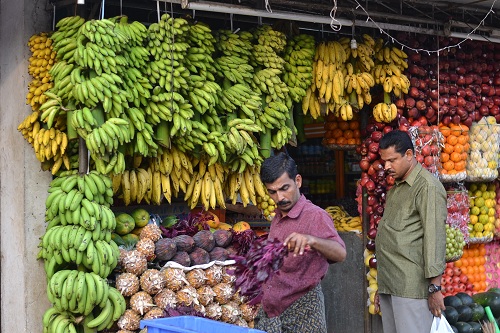
Before meeting Sandeep and getting to know about Kerala, I thought Chiquita was a the one and only banana species. I couldn’t stand the smell or taste of bananas. My friend Amanda still remembers the time I kicked her out of my car in college when she peeled open a yellow case. However, when I fell in love with a Malayalee, I was forced to expand my banana knowledge. I watched from afar as Sandeep consumed a few bananas every day. He would relish dried bananas from India, the stench of which sent me escaping to another room. The years soften me. I even learned how to make banana bondas because Sandeep looks so happy when he eats them. The truth is that I’ve come around and, once in a while, you can find me eating a banana.
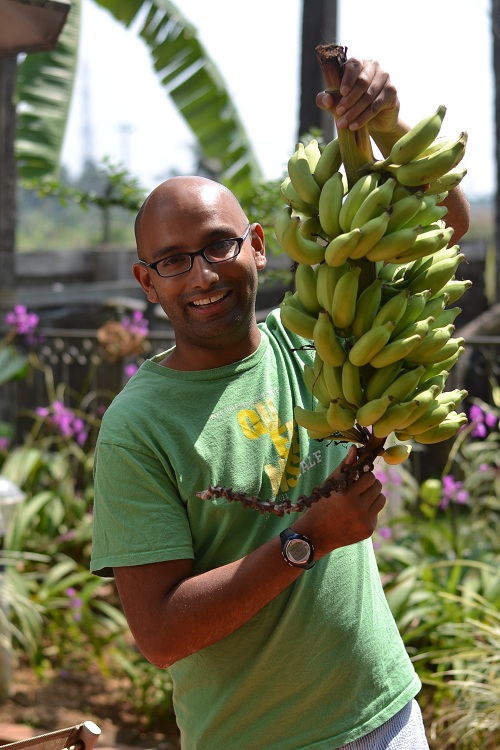
The fertile South Indian state of Kerala alone is home dozens of banana species that grow year round. Each serves a purpose, which is why Amma said she couldn’t find the right one for the bondas. For example, palayankoda is the most versatile banana. This variety is yellow and about four inches long. It can be eaten as is when ripe, or sliced to make banana chips when raw. This is also the type sliced and dried in the sun, yielding the stinky snack that sent me running. The palayankoda is what Amma needed for the banana bonda. Njalipoovan are yellow and about three inches. They are mostly eaten as is. Kadalipazham are fat red fruits about five inches long and are generally taken to Hindu temples as offerings.

Every respectable house in Kerala has at least one banana plant. A true Malayalee uses it in its entirety. The banana flower, which needs to be cut off in order for the fruit to grow, is made into numerous dishes.
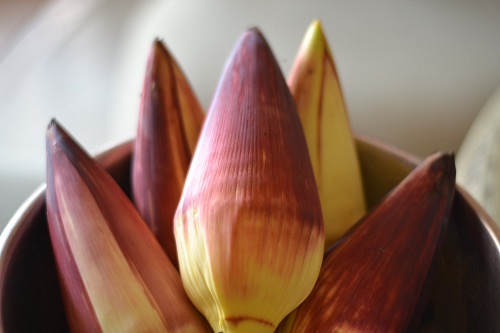
The leaves are used as plates. The inside of the trunk can used as a vegetable. The outer layer serves to decorate exteriors. The stalk and the peels are gifted to the local cow as treats. Malayalees have strong emotional attachments to the banana plant. As one Malayalee lamented to me, “The banana flower is a tragic thing, like a mother being killed to save her children.” When cooked, the purple flower tastes faintly like black button mushrooms and has the texture of cabbage.
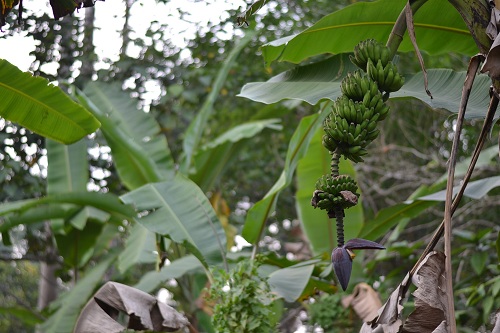
In Kerala it is a crime to confuse a banana with a plantain. I have been frowned upon with great disdain over this mistake. Plantains are a whole other story.

Want to get closer to the Kerala banana bonanza? Try your hand at banana bondas.

Banana Bonda Recipe

Beware – This is Amma’s recipe. Like all her recipes, she gives me approximate measurements and frequently omits ingredients. This is why none of the dishes I try taste like hers. Either way, I have tried to be precise by recollecting my own bonda experiments. Bottom line – be creative.

1/2 cup all purpose flour (I use half rice and half tapioca when I make them gluten free)
1 large ripe banana, mashed and whipped (yes, you can use Chiqita if you don’t have access to palayankoda)
1 tablespoon sugar
1 teaspoon baking powder
pinch of salt
1/4 teaspoon ground cardamom seeds

Mix all of this in a bowl. If needed, add just enough water to create a thick batter. Spoon teaspoonfuls into a deep fryer. Remove when brown and dry on a wire rack or paper towels.
9 Comments

Filed under Food, India

Our Family’s Attempts at Adjusting Safely

On a spectrum of paranoia and disregard, I’d like to think our approach to safety teeters somewhere in the middle. Sandeep started fatherhood with immense paranoia and I was irresponsibly carefree, but we’ve managed to meet each other somewhere in between. Our New York home had child locks on kitchen cabinets and finger guards on doors. We didn’t go all out with the toilet seat locks and oven knob protectors, but we did have electric socket guards on about a third of our outlets.

The most debated decision we had when packing for our trip was about car seats. In New York we wouldn’t think about getting into a car without making sure the kids were appropriately straight-jacketed into them. However, the last thing we wanted to do was schlep two bulky car seats around the world. In the end, we left home without car seats. We figured that we’d be taking tuk tuks and cabs in Hong Kong, Thailand and Malaysia and wouldn’t need them before our arrival in India.

During our first month of travel, we felt like paranoid Western parents. We only took tuk tuks when both of us could sandwich the kids. We didn’t take taxis without seat belts. We made sure the strap was always on the stroller. I can’t pin point if it was practicality or a casual traveler’s mindset that caused us to relax our requirements. A couple of weeks into Chiang Mai, I was taking the kids alone on tuk tuks – Kayan on my lap and Ava tucked under an arm. We jumped into cabs without regard for safety measures. The stroller, on the rare occasion we used it, was more like a musical chair that Ava and Kayan bounced on and off freely.

So, what’s happening in India? We thought we would use car seats for the kids since we are spending a lot of time in our parents’ private cars. Both sets of parents tried to convince us otherwise, saying that we don’t “need” car seats here. It may not the law, but we reasoned that the chaotic Indian traffic makes a stronger case for car seats. We bought an inflatable booster seat for Ava and coerced my father into buying a car seat for Kayan.

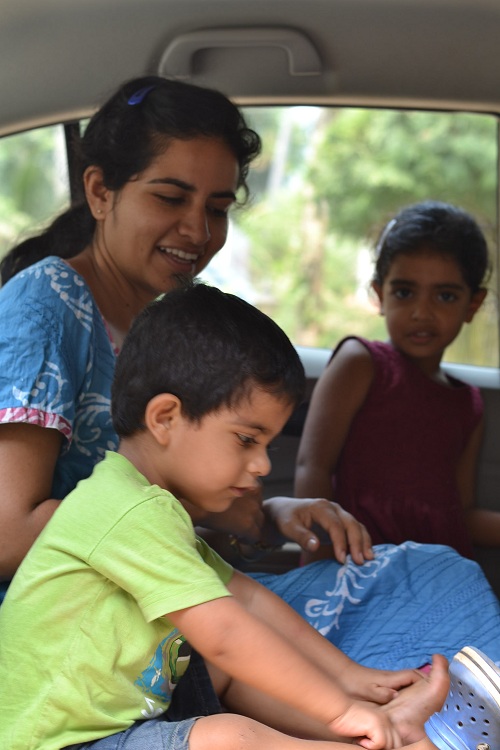
One month into our India travels, the booster seat sits warmly in its original wrapping and the car seat is gathering dust in Goa. One reason we haven’t used them is practicality. We often drive in one sedan, and between the driver and the extended family, there is no room for car seats. Also, with bumpy roads, windy hills and stop-and-go traffic, one kid is always getting sick. It’s much easier to deal with the consequences free of a car seat’s grasp. On our eight-hour 170 mile drive to Kodaikanal, we went through 19 plastic bags and two changes of clothing each. Practicality may be a justifiable reason, but a more honest reflection is that both Sandeep and I have adjusted our outlook on safety.

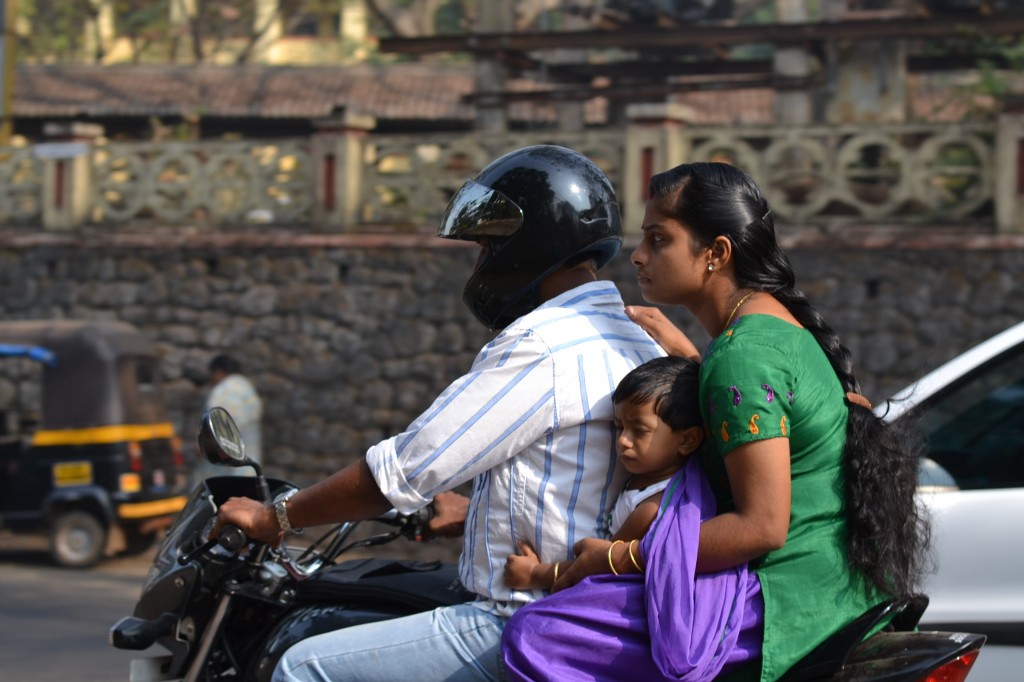
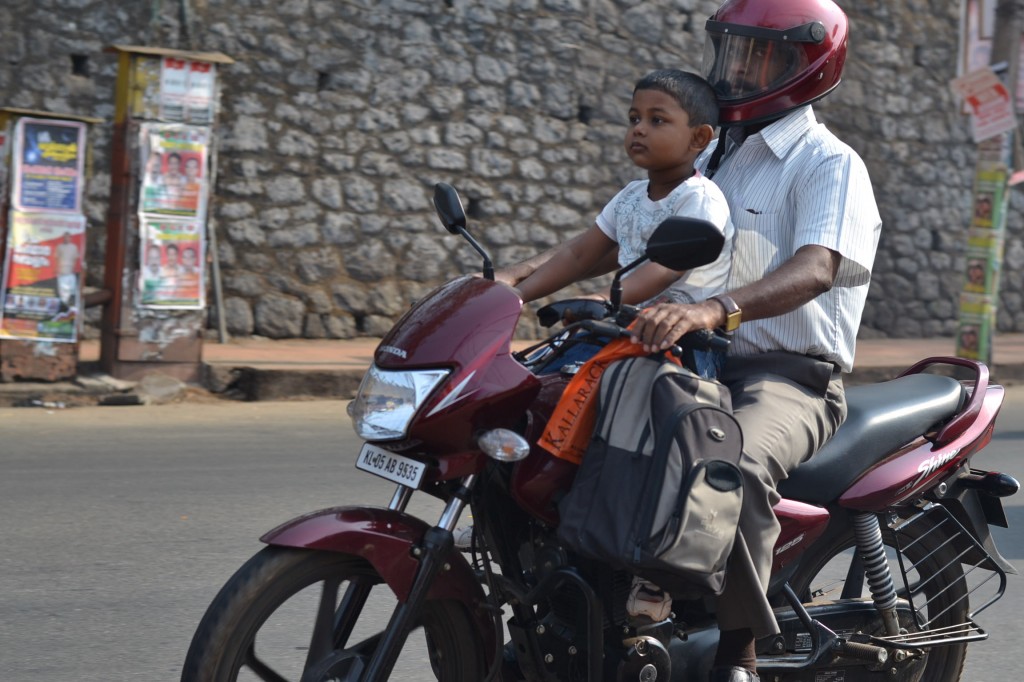
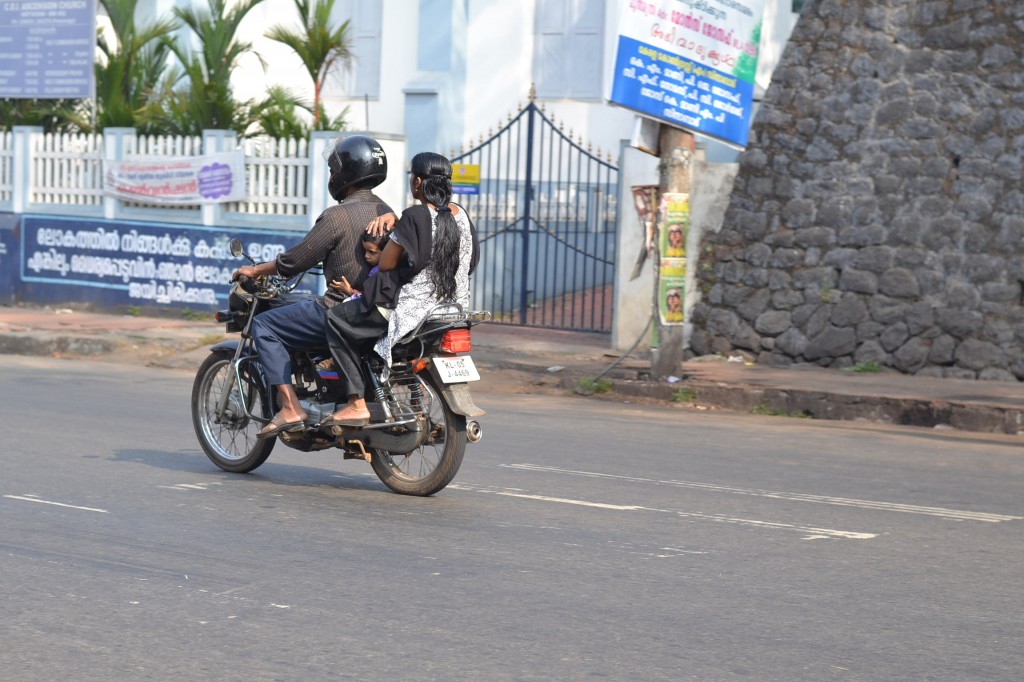
The concept of safety is vastly different around the world and, for better or worse, we’re adjusting to local norms. In New York, parents strap helmets onto kids riding kick scooters. These toys are about two inches off the ground, and powered by people about three feet tall. Yet in India, kids (and many adults) don’t even wear helmets on motorbikes.

Some kids are tucked between their parents, and some mothers attempt to protect heads with a free hand.

Three months ago we never would have thought our kids would be bouncing around in the back seats of Indian cars. The likely truth is that any of the parents in the above pictures care about their kids as much as we care about ours. But when there are no laws dictating safety, people default to the practical route. Despite the seeming chaos on Indian roads, at speeds of 20 miles and hour we’re not in any greater danger of getting into an accident here than we would be at the back seat of a taxi in New York, where we don’t use car seats.

There is a balance between safety and adjusting. We’re still trying to figure out how to safely adjust.

2 Comments

Filed under India, Travel With Kids

Pictures from the Indian Road

Our favorite way to get around is generally by foot. It enables us to get a feel for where we are, to stop along the way, meet some people and take things at a slow pace. We also like cycling, as it offers similar opportunities, but covers more ground. With the kids strapped into a trailer it also gives us the chance to get a work out.

Most places in India, particularly the cities, make it hard to stroll or cycle. Sidewalks are non-existent and traffic makes cycling with two kids difficult. Therefore, we’ve been spending a lot of time in cars. I’ve tried to take in the scenery as much as possible from the back seat, child in one hand (no car seats, but that’s a story for another post) and camera in the other.

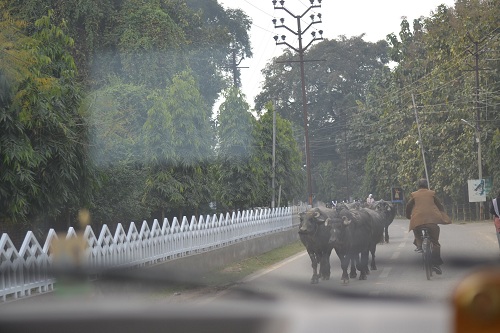
Here are a series of pictures taken from cars in India. Driving may not be our first choice for travel, but India is such a vibrant country that we’ve experienced a lot from the passenger seats. Enjoy the ride.

Yes, there really are cows on the streets. Sandeep corrects me, "Even Kayan can tell you these are buffalo. Water buffalo." Cow or buffalo, they don't always use the correct lane.

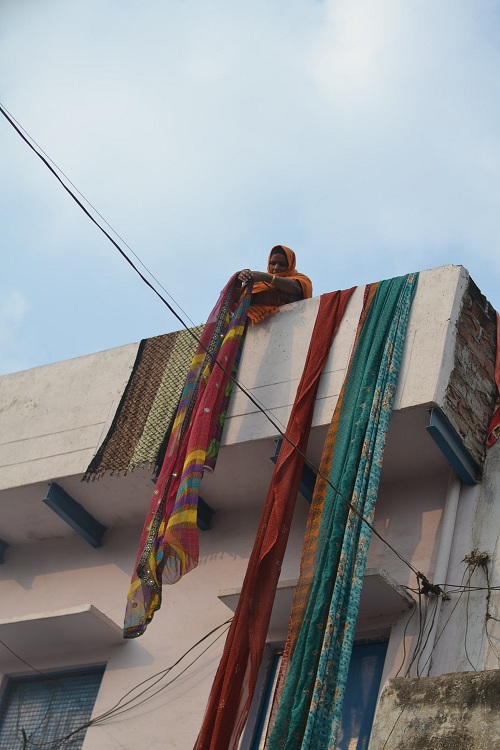
I liked the colors of the sarees hanging to dry in the sun. Ava wanted to know why her curtains were hanging out.

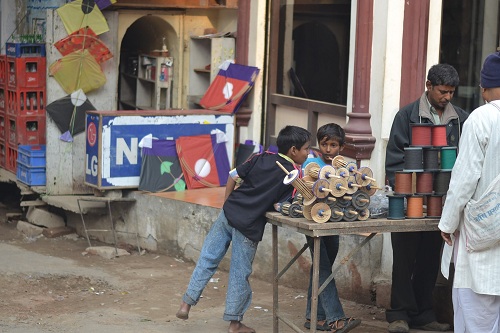
This was taken just before Makar Sakranti, India's largest kite flying festival. Kids check out kite stores for the kites and string most likely to cut down opponents.

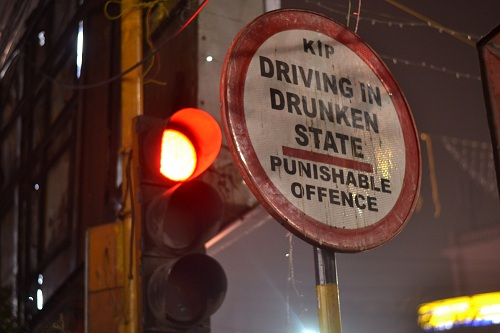
An important reminder, even if colorfully worded.

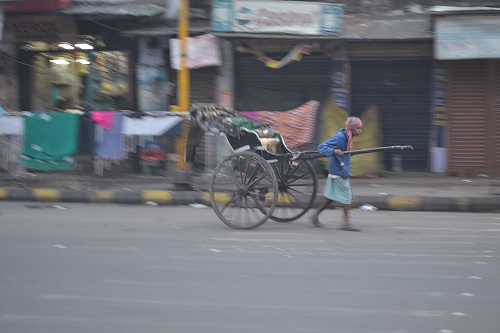
The picture captures the solitude of the rikshaw-wallah against the chaos of Kolkata.

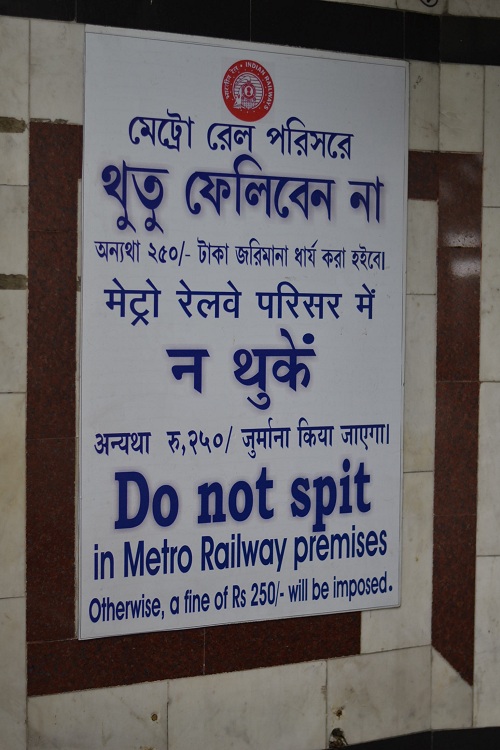
Unfortunately spitting (mostel betel nuts) is a big problem in northern India. Here is the Railway's attempt to keep the area clean. The fine is $5.

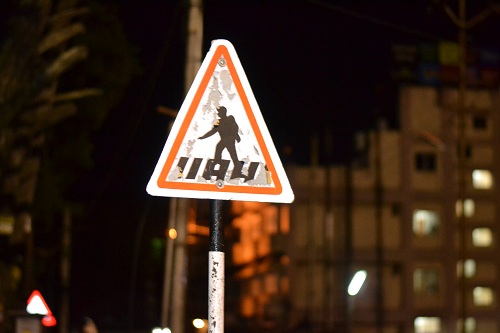
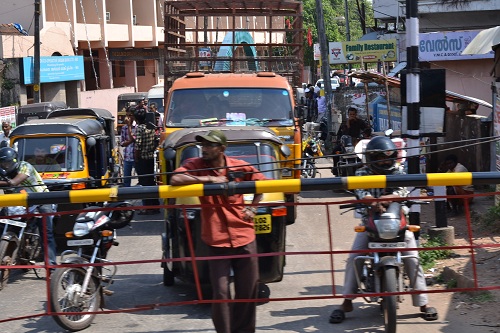
Pedestrian crossings don't mean much in India.

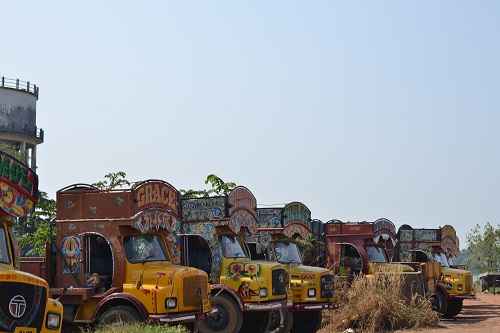
Truckers decorate their vehicles in bright colors and give them lucky names such as Grace and Mary. They remind Sandeep of the animated movie, Cars.

6 Comments

Filed under India

Back to Our Wedding in Fort Cochin, Kerala

Our wedding in Kerala was small by Indian standards. There were only 700 guests. We chose to have our wedding in Kerala because Sandeep’s family is from here and the region has gorgeous topography. It seemed to be a great location for a destination wedding. The destination (and hopefully draw of the Malarkar Luke family!) brought together people from Australia, New Zealand, The Americas, Europe, Africa and all over Asia. We were so wrapped up in planning and the wedding that Sandeep and I didn’t quite appreciate that our location of choice, Fort Cochin, had been drawing visitors from around the world for centuries.

On our way back from Kodaikanal, and seven years into our marriage, we returned to Fort Cochin to revisit some of our wedding sites. The trip gave us our first real orientation to the rich history of the area.

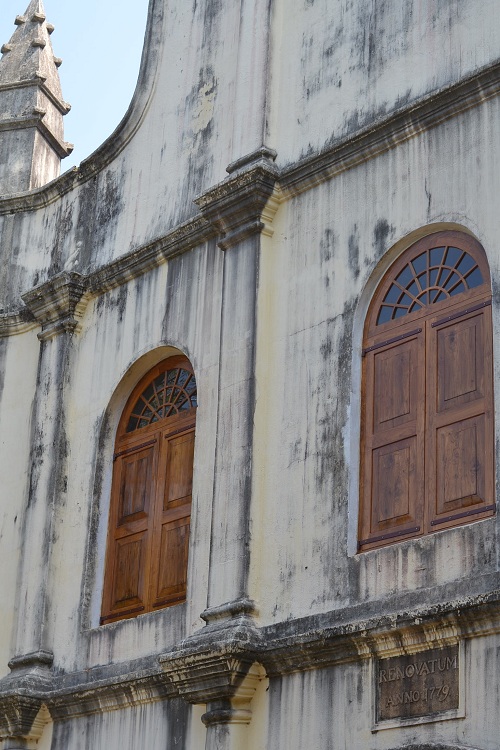
The original plan was to get married in intimate Church of St. Francis, likely the first church built by Europeans in India. Vasco da Gama was buried here in 1524, but the Portuguese reclaimed his body back to Lisbon later. The church still operates large man powered cloth fans suspended above the pews, a leftover luxury of the British.

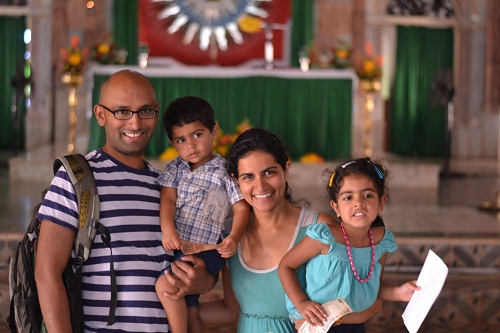
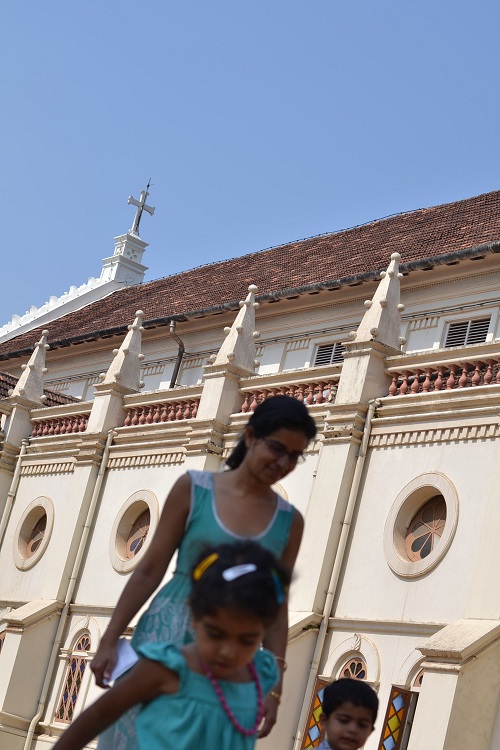
However, once the confirmed guest list crossed a hundred, we opted for the Santa Cruz Basilica, whose history dates back to the 1500s. The original Portuguese church was destroyed by the British and then rebuilt. The Basilica is now a tourist site, so in addition to our guests bulging at the walls, we had a healthy group of uninvited visitors taking pictures of the occasion. Ava doesn’t seem to comprehend a world that existed before she did, and she only half grasped the concept of us getting married at all.

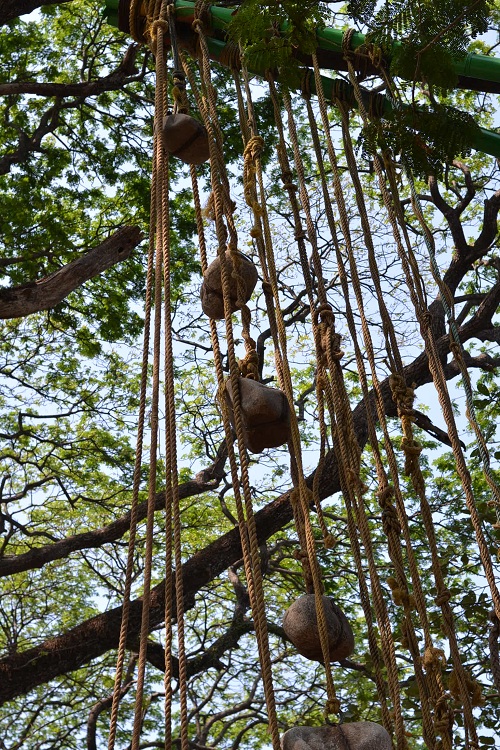
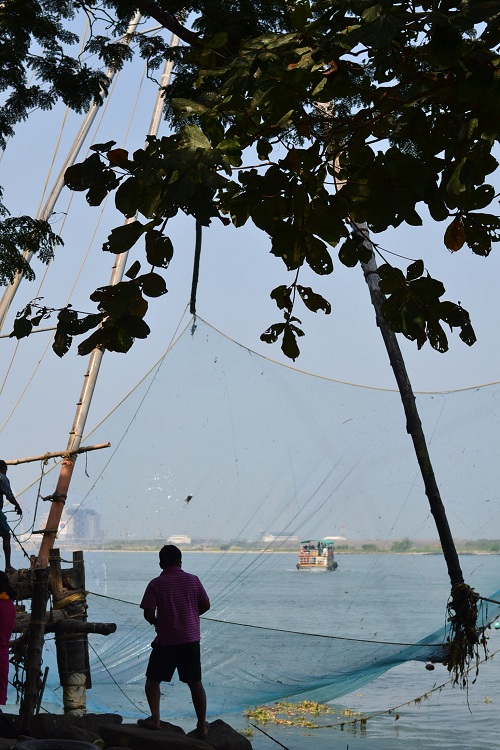
The backdrop to these churches are the swooping Chinese fishing nets lining the northern shore of Fort Cochin. The nets were introduced to the region by traders from the court of Kublai Khan.  They still work on a manual system of stone weights that require multiple men to maneuver.

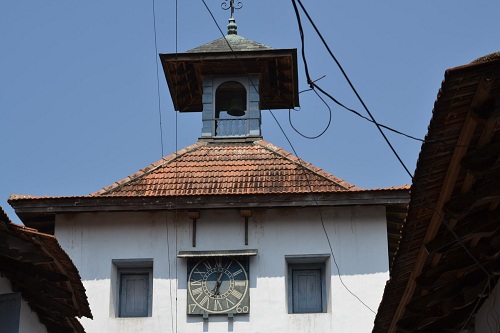
Evidence of Cochin’s trade with the Chinese can also be seen in the blue and white Canton tiles inside the Paradesi (White Jew) Synagogue. It was founded in 1568 and served the area’s once thriving Jewish community. There is evidence that a group of Judean traders settled in Cochin in 562 BC. In the sixteenth century, Sephardic Jews (known later in the area as Paradesi Jews) fled the Inquisition and added to the Jewish diversity of Cochin. Only a handful of Jews remain in Cochin today, although there are an estimated 8,000 Cochin Jews living in Israel.

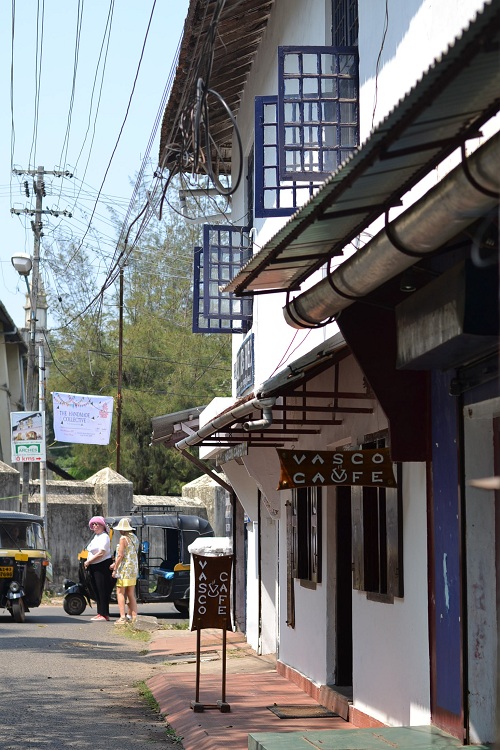
A random stroll through Fort Cochin leads through alleyways of Dutch, Portuguese, Arab, Indian and British architecture. The buildings are now home stays, cafes, and a mix of tourist stores and outfitters. Despite their new functions, many still retain their original facade and charm.

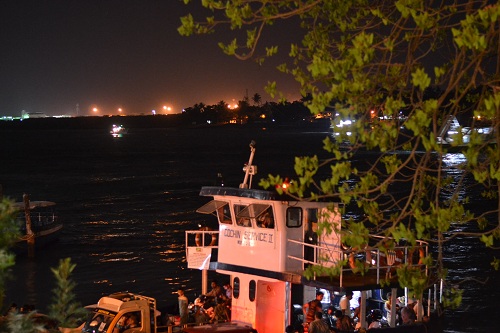
We were able to appreciate the historical diversity of Cochin by returning as tourists. In celebration of our wedding, we had a fresh seafood dinner (we hoped caught by the fishing nets) at Brunton Boatyard and watched the ferry boats busying themselves on the harbor.

We were honored to have a global representation at our wedding. Now we understand that our host location has seen its own abundance of global guests for centuries.

6 Comments

Filed under India, Religion

Old Memories Create New Ones in Kodaikanal

My expat parents had jobs that took them all over the world, and I spent junior high (middle school) in four different countries. By the time I was 13 the family decided I needed some stability so I spent the next five years boarding at Kodaikanal International School in southern India.  

I loved  boarding school. We were a bunch of teenagers, free to spend every minute of every day with our friends. Kodaikanal is a hill station with the bluest skies and the brightest stars. The air smells of eucalyptus, due to the dense blue gum forest that covers the hills. It’s a pretty idyllic place to be a kid. 
We decided to take a trip down memory lane and spend my birthday in Kodai, as it is affectionately called. I was hesitant to ever return and break the spell of so many fond memories. But given how hard of a place it is to reach, we knew we’d never make if we didn’t go during this trip. 
Kodai is the only hill station in India to be settled by American (as opposed to British) missionaries. They started a school here which, in 1901, became Kodaikanal International School. Much of the town revolves around the school. There isn’t too much to do here except enjoy nature, hike and get some fresh air. 

My first observation was that the town has become much more congested and built-up than I remembered. Sandeep reminded me that it’s been a while, and at this point there is less time for Ava to enter High School than has elapsed since I left. It was one of those comments that reminded me that I am an aging mother.

Despite the ‘advancement’, Kodaikanal is still gorgeous. Sandeep agreed that he had never seen a sky so blue. While the kids napped, we sat out and talked about nothing in particular, passing time in the sun. It was like we were in high school again.

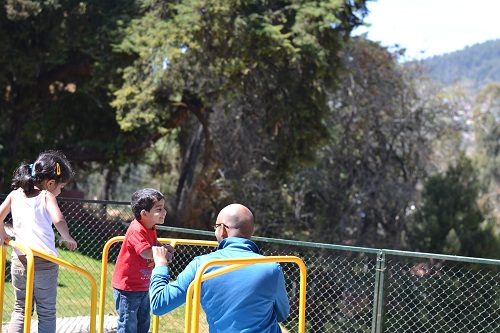
There is a public playground by the lake. As we entered the kids who were playing surrounded us and started begging. It was a very awkward interaction to explain to our kids and we opted instead to visit the school’s playground. Our kids took us back to our elementary school years.

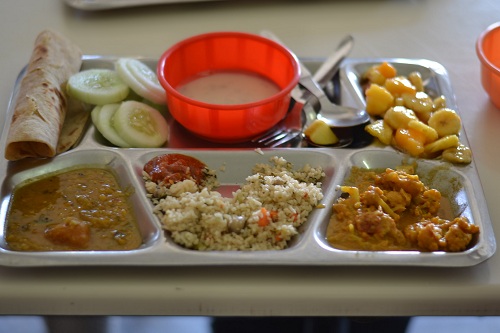
The best birthday experience was eating at the school dining hall. As students, we grumbled about the food and saved every penny of our allowance to eat out. My first week in college I realized how spoiled we were. Our school food was and remains amazing. It’s still served on the same trays as prison food (at least in the movies). 

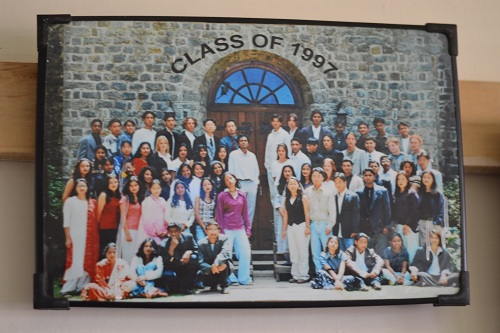
Class pictures line the dining room walls, and we ate just under class of 1997. Do I look the same? Left, first row standing, pink shirt.

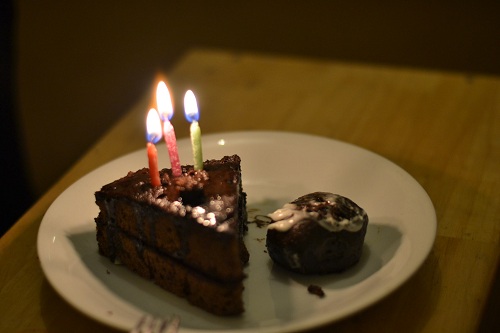
Some of the same restaurants still exist and there are only a handful that we’d go to even now. We had my birthday dinner at Tava’s, an Indian vegetarian spot, whose food I have been fantasizing about for 15 years. I put in my regular request and nervously waited, convinced that my memory inflated the taste with each passing year. The food took my straight back to being a student, starved for cash and saving up enough rupees to buy the meal that I could so easily afford today. Sandeep seconded the food was good, and in the highest of compliments from him, that he didn’t even feel like he had to have meat. Unfortunately the spot that made the best cake in town shut down, so we got a slice of cake and a chocolate ball from Fay’s, the original maker of the now ubiquitous Kodaikanal handmade chocolates.

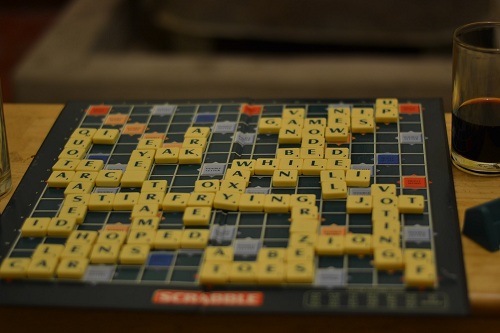
With the kids tucked in bed we broke the cardinal school rule and opened up a bottle of wine. I beat Sandeep by 5 points in Scrabble, that’s if you count stirfrying as one word. I think he gave in on that one as a birthday gift. 

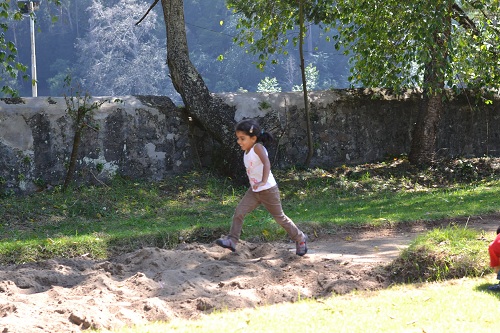
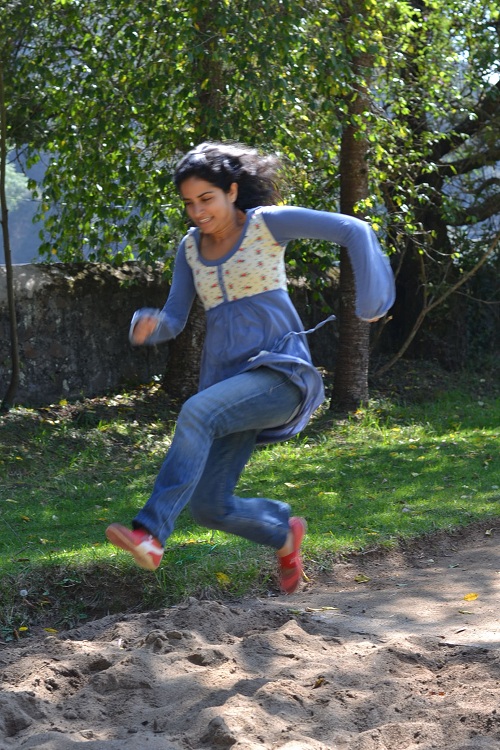
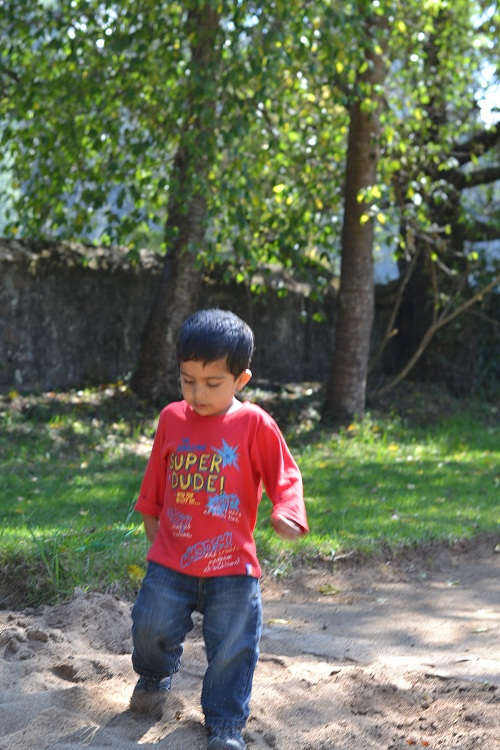
Sandeep finds it hilarious that I was a varsity athlete here. Over the years, I have confidently boasted about my standing broad jump skills. Since we haven’t seen a broad jump pit outside Kodai, it was a claim that couldn’t be refuted. The minute he saw our track pit, he had me prove myself. The entire family took turns jumping. I won’t tell you who won, but Kayan came in last.


When I was a student, Kodai created lifelong memories and gave me some of my closest friends. To this day, we consider each other family. Returning brought some of those memories to life. More importantly, this wonderful town gave me the gift of new memories with my new family.

11 Comments

Filed under India

The South Indian Restaurant Experience

When we go out for Indian food in New York, it’s usually to a South Indian restaurant. The food is native to Tamil Hindus, who have a wide variety of vegetarian dishes made from pulses, rice and various vegetable curries. These dishes are harder to replicate at home, so South Indian spots end up being the go-to dining choice for many Indians. Our restaurant of choice is Saravana Bhavan, on Lexington Avenue’s Murray Hill, also affectionately known as Curry Hill due to the aromas wafting from the area’s many Indian establishments. The New York eatery claims to be the child of the original Saravana Bhavan Hotel Restaurant in Chennai. We had a three hour layover recently in Chennai and decided to seize the opportunity to determine whether this is true.

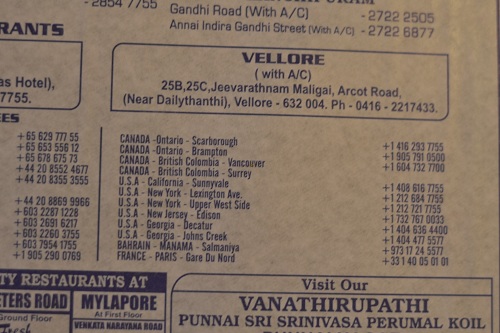
Our doubts were put to rest when the place mat proudly claimed to have locations all around the world, one of which is on Lexington Avenue.

We ordered a dosa and thali, similar fare as we would in New York. We’re delighted to report that the food was remarkably similar to the New York outpost. All you New Yorkers who want a taste of true South Indian food – head to Lexington Avenue and 26th Street.

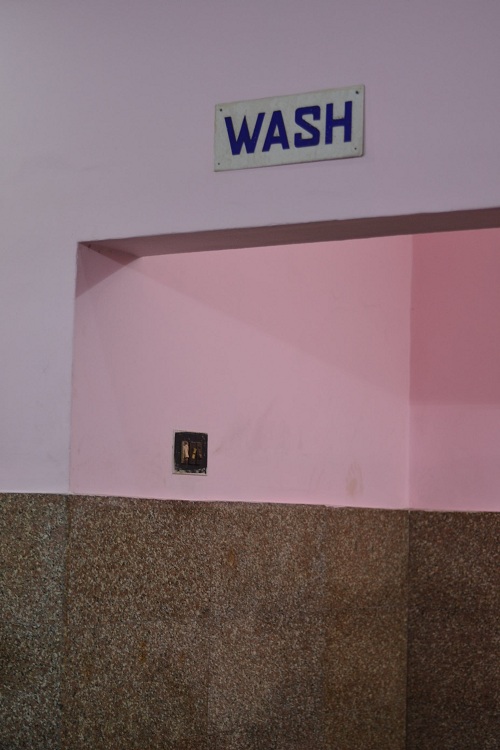
Here’s a short guide to eating at a South Indian restaurant. These pictures were taken at Anand, possibly the longest running South Indian restaurant in Kottayam, Kerala. In India you’ll likely have a choice of the AC (air-conditioned) section or regular dining. The food is the same, but the AC section a price premium. First, wash your hands as you are expected to eat with them. Only your right hand though, the left one is considered unclean. This is always a challenge for left-handed Sandeep.   A true South Indian restaurant will have a hand washing station (yes, Saravana Bhavan in New York has one too).

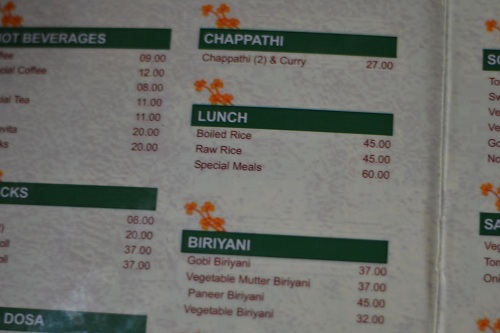
Getting through the menu may be a challenge, particularly when faced with odd items such as “Raw Rice” and vaguery like “Special Meals”.

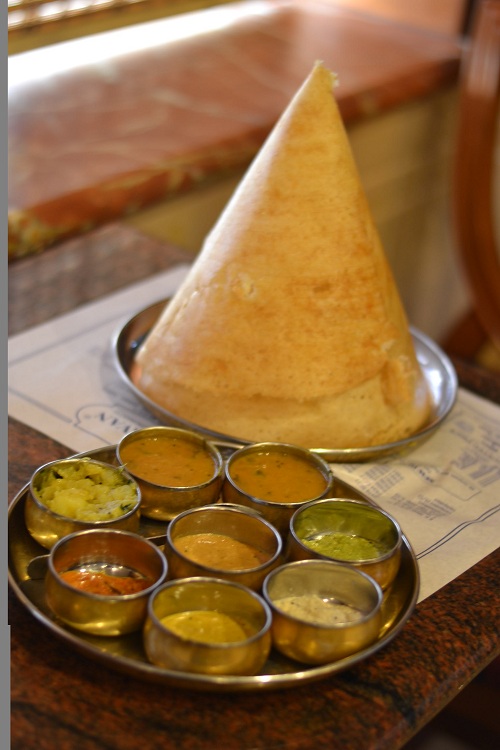
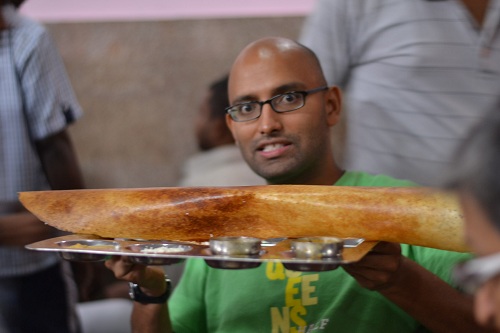
The most traditional fare are dosas (roasted flat lentil pancakes), vadas (fried lentil donuts), and idlis (steamed rice and lentil patties).  All are served with sides of sambar (spiced lentil gravy) and various chutneys, including coconut and tomato. Thalis, AKA Special Meals or Set Meals, are a pre-selected assortment of various side dishes and rice. For the wow factor, order a paper masala dosa, a gravity defying thin pancake rolled around a mound of spiced potatoes.

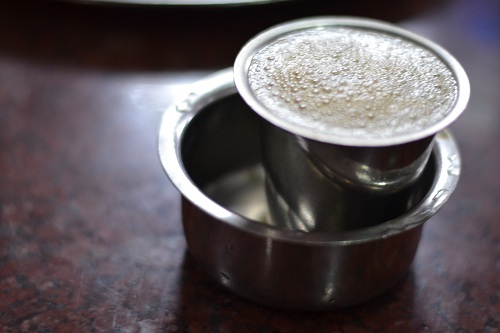
A traditional South Indian meal is not complete without frothy coffee, brewed with milk and plenty of sugar. It’s served in a stainless steel cup nestled into a stainless steel bowl. Pour the coffee into the bowl and measure out smaller amounts to drink from the cup. This maneuver cools the coffee.

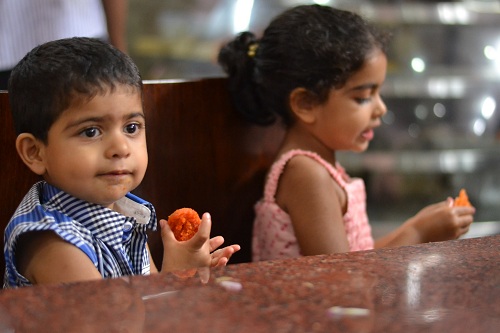
We don’t deny bribing our children. To get them through dinner we promise them dessert. They heartily ate their dosas and were rewarded with round ladoos – semolina roasted in clarified butter, boiled with sugar and rolled into a ball.

That ensured that they were just as excited we to return for another South Indian meal.

6 Comments

Filed under Food, India

All That Glitters is Gold In Kerala

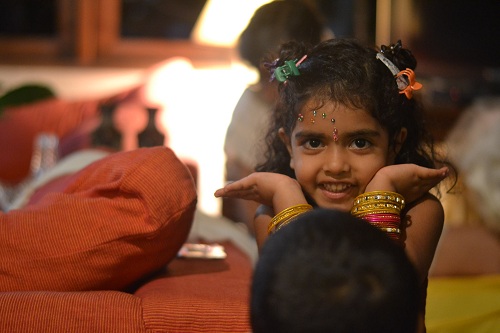
Ava and I differ significantly in our opinion on jewelry. I wear a wedding ring and Ava wears layers of necklaces, bangles, and hair accessories. We haven’t yet pierced her ears for fear of what she’ll hang on them.

In this way she is much more Indian than me. Indians love jewellery, particularly gold. It’s seen as a sign of wealth and no respectable Indian woman would step out of the house without gold ornaments. My mother’s biggest disappointment in me may be that I show no interest in her jewelry collection.  Sandeep’s mother is more polite, saying “Diya is a simple girl.” Luckily they have Ava to hand over their jewelry chests. She already has her hands in them anyway.

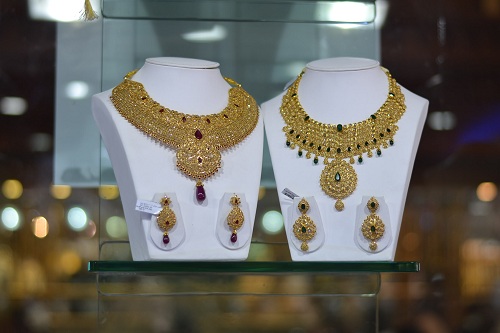
Above any other metal or stone, gold is the most revered jewelry in India, particularly in the south. This is how the quintessential South Indian bride arrives at her wedding. It’s not about the dress or the flowers. It’s about the gold.

A woman’s wedding jewelry is considered her’s alone. The majority of married Indian women don’t have the independence that comes with their own income, so their gold is a protection of sorts against hard times.  Weighed down with gold, an Indian bride has no option but to glow.

India accounts for about 20 percent of global gold demand. It’s seen as a store of value more than an investment. Even as the world economy struggles, in 2011 Indian gold demand was up about 15% in volume. Indians see gold as a good inflation hedge, and have done their part to drive up its value. If the country’s economic growth sustains, greater wealth and urbanization will continue to boost demand.

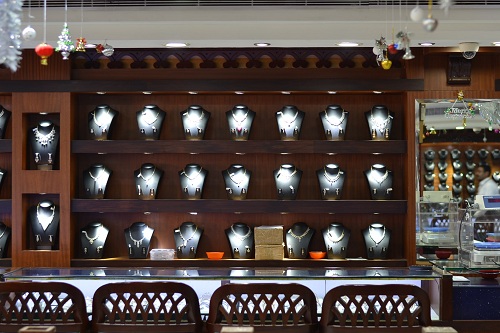
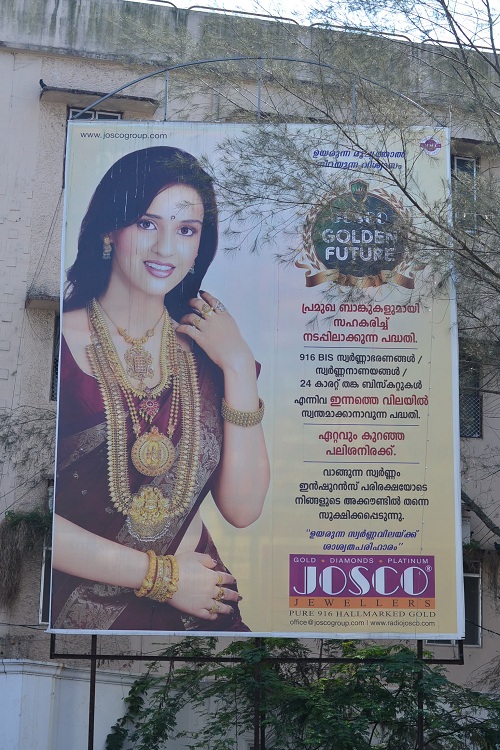
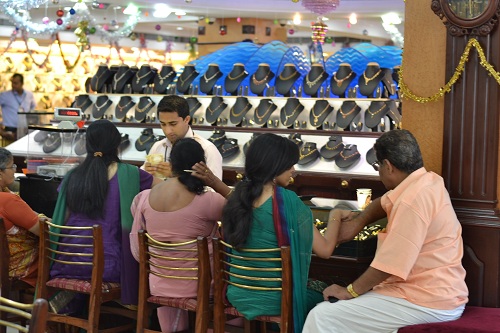
We paid a visit to Josco, Kerela’s hallmark gold jeweler. Josco has four stores, each of several thousand square feet, in the town of Kottayam alone. The town is only about 1 square mile. When we walked into the store, we were asked what we wanted. The greeter seemed confused about “We’re just looking.” It was clear that the store’s hospitality was highly correlated to the customer’s willingness to buy. Those that were trying things and making selections were offered water. Those that started shelling out money were sipping tea. We were just snapping pictures and asking questions and got nothing but polite smiles and subtle nudges back to the doorway.

Stadium-like seating line each counter, with women perched eagerly along the first row and bored men sitting behind.

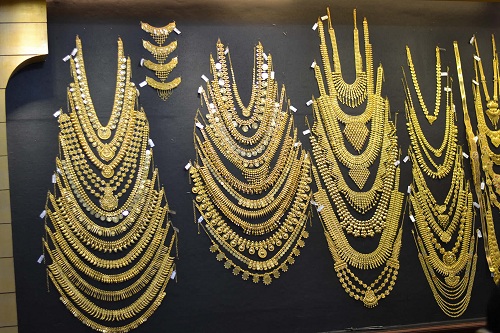
Wedding sets line one wall.

While more simple sets line another. Yes, there are the more simple sets.

Indians that cannot afford gold store their value in silver. This is very common among rural families who lack access to or trust in banks. Increased wealth leads Indians to gold. Most families now have a portion of savings in the bank and about 10 percent of their overall savings in physical gold. Despite the rapid rise in wealth of the middle class, platinum and precious jewels have not yet taken off. Josco has a section of its store devoted to platinum, but it’s empty.

It just proves that all that glitters is gold.

2 Comments

Filed under India

Entertainment on an Indian Train

We just completed our first Indian train journey, between the tongue twisting Thiruvananthapuram and Kottayam in Kerala. Any mode of transportation in India is an adventure, but hopping onto the largest rail system in the world is an experience all its own. The Indian Railways has over 8,000 trains and carries over 14 million passengers a day.

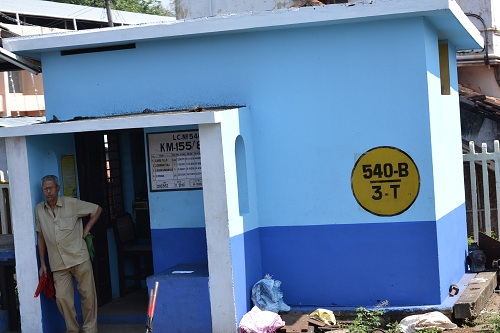
A common saying is that the best thing the British left India is its train system. I wonder how much has actually changed since the British were here. For example, rail road crossings continue to be manually operated. Here’s a crossing guard watching our train go by.

A single train has a dizzying array of classes to choose from. Given the distances traveled and glacial speed, most of the compartments are arranged to allow for overnight sleeping.

Second Class – Unreserved open floor bench seating and cheapest mode of transportation. If you really want to get up close and personal with Indians, stake a seat here. Expect no privacy and be ready to share anything you have. The compartments get very crowded and at nighttime expect to find your peers sleeping on the floor or on you. The views are great since the windows are wide open. Despite this, packed quarters often have passengers literally hanging out.

Second Class Sleeper – Reserved sleeping benches and the way the middle class goes. Beds are grouped into 2 columns of 3 stacked beds, allowing for some privacy. Windows are open.

AC Three Tier Sleeper – Similar to Second Class Sleeper, but with air conditioning, linen, blankets and a pillow. The view is obscured by windows in need of a good bath.

AC Two Tier Sleeper – Like the AC Three Tier except beds are grouped into 2 columns of 2 stacked beds, offering more privacy. This is the way more affluent Indians and most business travelers go.

AC First Class – The most luxurious (and cleanest) way to go, with bedding and meals provided.  These compartments are available on very few long haul express routes.

AC Chair Car – Reserved individual seating in an AC compartment. Some meals are served. This class is generally available only on shorter haul journeys.

The results of all these classes are long trains that each ferry thousands of passengers throughout the country.

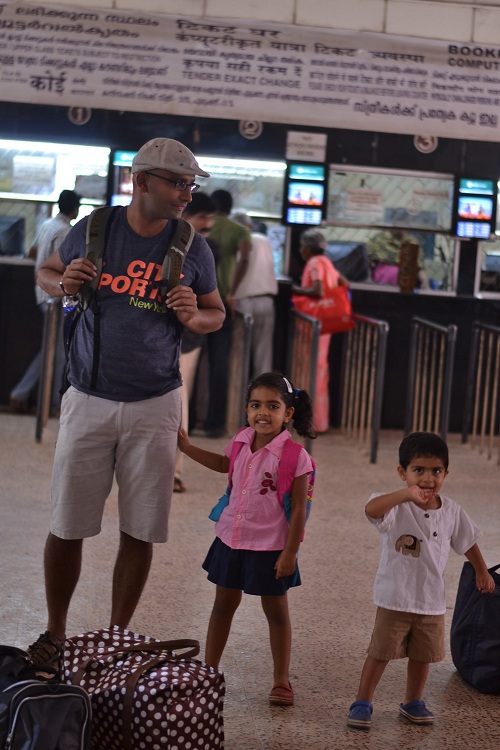
The Kottayam station has separate windows for ‘Enquiry” and “Tickets” which meant that we had to ask all our questions at one counter and then buy our tickets at another. Enquiry has updates on train timings, but Tickets doesn’t get the same memo. On our way to Tiruvananthapuram we purchased our tickets at Tickets only to find out later from Enquiry that the train was 45 minutes delayed. This sent us back to Tickets to trade in our tickets for an earlier train. Tickets in hand and enquiries answered, our next challenge was to find our compartment among the 14 carriage train and maneuver the family to our seats.

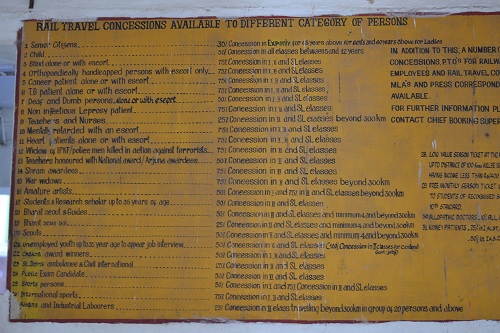
Our choice was the AC Two Tier Sleeper, the most comfortable option for the 150 kilometer three hour journey. That’s 31 miles an hour, but don’t fool yourself into thinking you can drive any faster. The train journey cost $8 per person, cheaper than a movie ticket in New York City and multiple times the entertainment. If we really wanted to, we may have been able to claim one of the many discounts available. There’s the rather vague “Amature Artists” and one the Occupy Wall Street gang would love “Unemployed Youth Up To 35 Year Age To Appear Job Interview”.

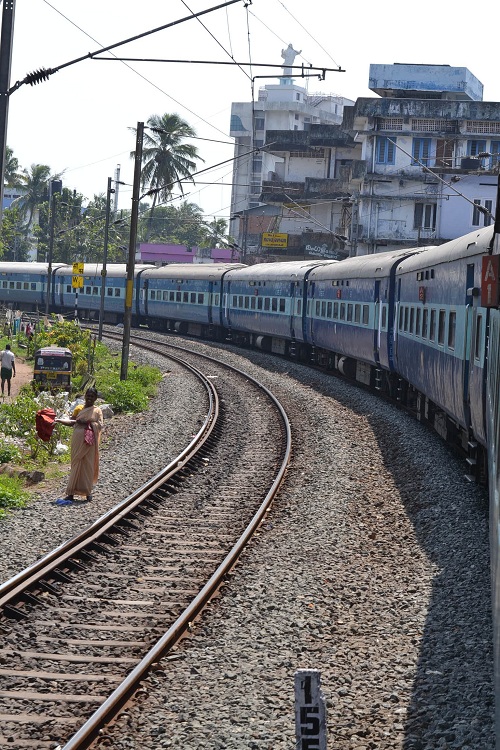
The advantages of traveling by train were that the kids could move around more than they would in a car, Ava didn’t get motion sick, and we were able to enjoy some great views. Since the windows were too grimy, taking any pictures meant that we had to hang out of the open doors flanking the compartment.

It was entertaining to watch people wait for us to go by.

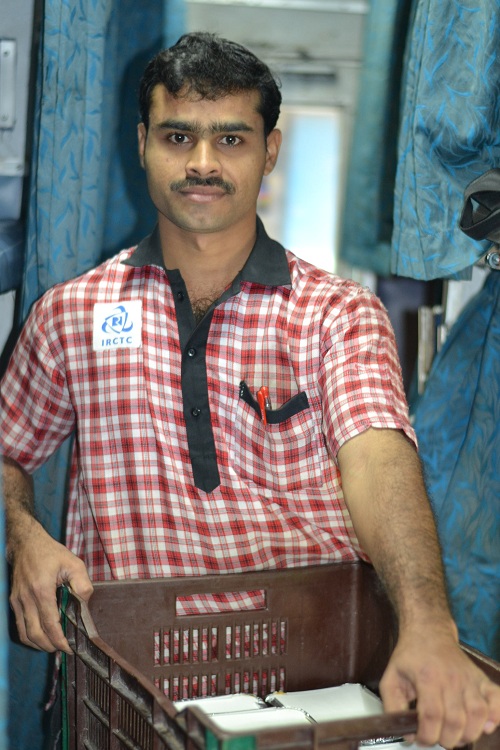
One of the most exciting things about Indian railway travel is the array of food served on the train. Every few minutes a seller marches down the corridor chanting “chai chai”, “coppee!”, “Biryani”, “Soft drinks”.

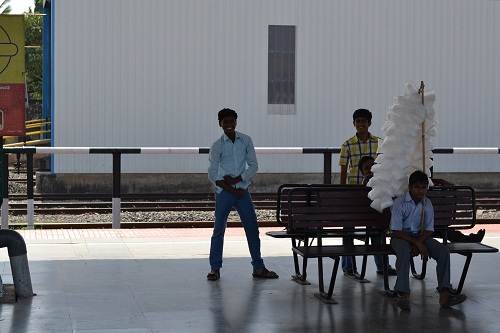
Other vendors, like this cotton candy (candy floss in India) seller, wait on the tracks for passengers in transit.

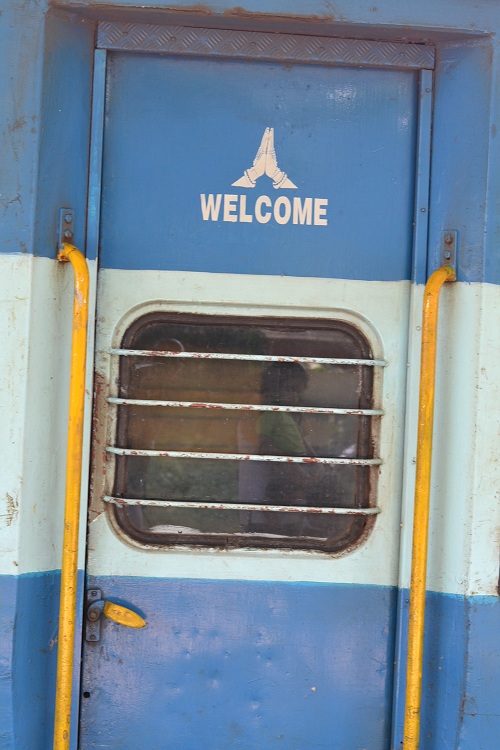
I love the stimulus of an Indian train journey. Just don’t go in with too many romantic notions. The smells of the lavatory still find their way to first class and the chaos on the railroad tracks may have you turning around before you board. If you decide on a journey, the Indian Railway System is ready to welcome you to a colorful side of the country.

Sources: For more on Indian trains, visit Indiamike and the Indian Railway Website.

8 Comments

Filed under India

Witnessing the World’s Largest Annual Pilgrimage

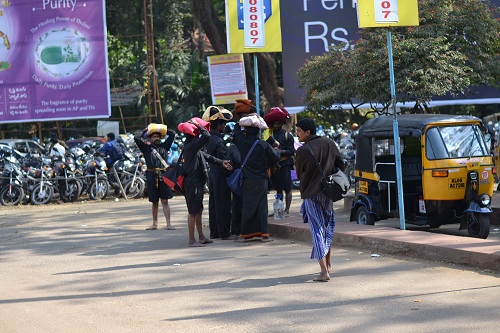
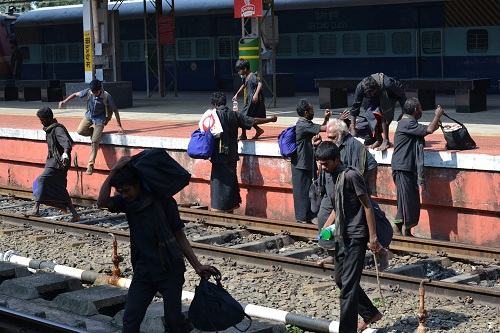
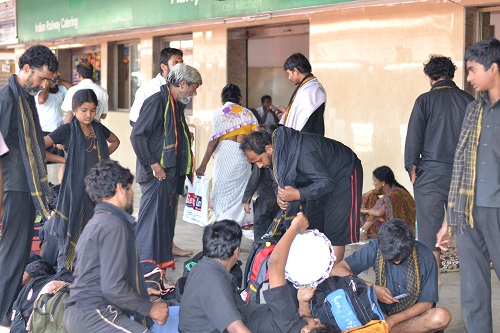
Since we arrived in South India we’ve seen hoards of barefoot men clothed in black mundus. Most carry bundles on their heads and all walk with purpose.

These are worshipers of Ayappa, a Hindu deity and child of lord Shiva and lord Vishnu’s female avatar Mohini. They are participating in an annual pilgrimage to their main shrine in Sabarimala, believed to be the place where Ayappa meditated after killing the demon Mahishi.

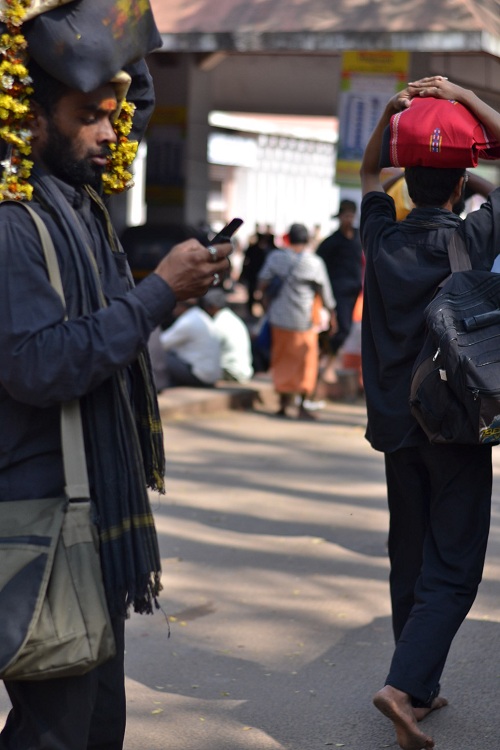
Pilgrims are meant to be celibate, vegetarian, and intoxicant-free for 41 days before setting out on a 61 kilometer walk along a forest route to Sabarimala. The journey takes four days and the pilgrims carry nothing but offerings on their heads and a rucksack with personal items. (And we thought we traveled light.) One may be so devoted as to forego shoes and worldly comforts for days, but this particular devotee felt his cellphone a necessity.

Pilgrims that don’t make the walk crowd trains and buses, perhaps believing that their devotion gives them protection against high voltage and moving locomotives.

Whatever mode of transportation is used, the pilgrims travel in packs, with an assigned leader. Women of childbearing age are not allowed at Sabarimala. This is in respect for (and concern over?) Ayappa’s celibacy. The result is packs of men bursting into chanting, singing, and general merriment.

While the pilgrimage looks like a time of bonding and jubilation, it has not been without its consequences. 106 people were trampled to death during last year’s pilgrimage. This year, 34 heart related deaths have been reported.

It is estimated that 4 to 5 million people attend the annual pilgrimage to Sabarimala. If this is correct, the event rivals attendance at the Muslim Haj to Mecca. The only other pilgrimage that can claim higher attendance is Kumbh Mela, also in India. Large gatherings come easily to a country of over 1 billion people.

4 Comments

Filed under India, Religion

Watching The Day Unfold on a Kerala Beach

Every time we visit India we end up hopping about the country seeing relatives. One grandmother is in Pune, near Mumbai. Another is in Goa. The third is in northern Kerala and the fourth in the southern end of the state. Neither Sandeep nor I knew any of our great-grandmothers, so we’re making it a point for our kids to know theirs.

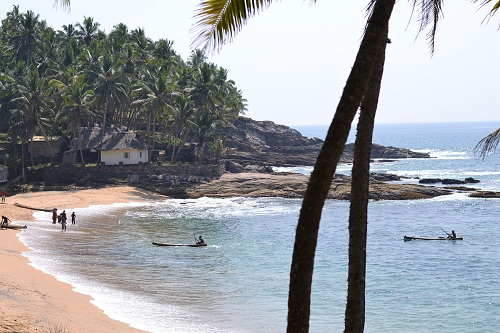
The trips back and forth are made easier by the fact that all four live in fabulous locations. Pune is by vineyards, Goa is Portuguese-influenced beach heaven, and Kerala has the backwaters and a sandy coastline.  We took the opportunity to savor Kerala’s beaches between our visits to Sandeep’s two grandmothers. We chose to stay at a sleepy Ayurvedic resort, Coconut Bay, in Vizhinjam, a fishing village adjacent to the tourist outpost of Kovalam.

When compared to the rest of India, Kerala is relatively new to tourists. A few places such as Kovalam and the backwater centers of Kumarakom and Allepey have become hedonist tourist destinations. However, much of Kerala still enjoys a traditional lifestyle that has been lost further up the western coast of India. In Goa, for example, most traditional coastal fisherman have traded in their boats for water-sport outfits, beach shacks, or some other more lucrative arrangement. By contrast, Kerala still maintains much of its coastal fishing culture.

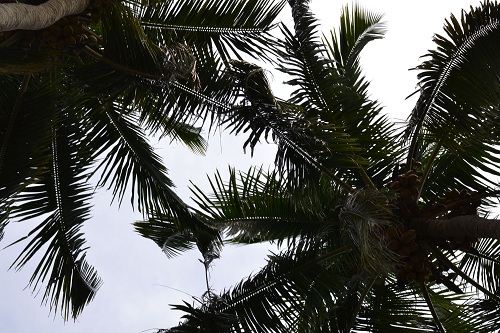
The entire family, kids included, were particularly lazy during our Vizhinjam stay. We started our morning flattened to hammocks, counting the coconuts on the trees that supported us. Then Ava astutely asked, “How do the coconuts come down?” My logical mind won the battle with my lazy body and we traded in our hammocks for the beach.

We were content to spend the rest of the day watching life on the water. I took this video when we first set out to the beach. By my commentary, one may think all of Kerala is a utopia of harmonious religions and cultures.

httpv://youtu.be/gx5jj2NrKzU

What I realized afterwards is that the church and the mosque at the end of the peninsula were built out of competition from their respective communities. The mosque overlooks the Muslim quarters of town, home to a few thousand fishermen, and the church serves the several thousand Christian fishermen. Tensions between the two occasionally culminate in riots, giving some notoriety to this otherwise sleepy fishing village. I suppose I was being seduced by the ocean when I took the video.

Fishing in Vizhinjam goes on as it has for generations. We watched fishermen row their boats out and net their catch. As the day wore on, the boats were welcomed back to land by waiting family members. The men took the boats out while women waited ashore to sort the loot.

Flocks of crows and gulls also waited to greet each boat. The fishermen and birds engaged in a well practiced dance. A few fish were thrown on the beach to satisfy the birds while the catch was quickly loaded into buckets and hauled away.

With the catch safe from beaks, the boats were put to sleep for the night. The sight of a melting sun must never tire a fisherman, because as dusk fell, the fishing families and us watched the sky turn from blue to orange to pink.

Shuttling between families was always a tiring experience during our shorter trips to India. Now that we have more time, we are able to appreciate the journey as well as our destination.

2 Comments

Filed under India